A SIGHT TO BE SEEN: profiles from Hong Kong's LGBTQ+ community

While considered one of the world’s most modern and cosmopolitan cities, Hong Kong has historically had a mixed record when it comes to the recognition of LGBT+ rights. Recently, a court case over spousal benefits ruled in favor of recognizing foreign same-sex marriages. Despite this progress, growing concerns over the lack of progress on LGBT+ issues has led reporter Adam Chen to highlight four unique stories about individuals and couples in Hong Kong taking a stand for more acceptance, compassion and understanding.  


A SCENE FROM THE TOP


BY ADAM CHEN

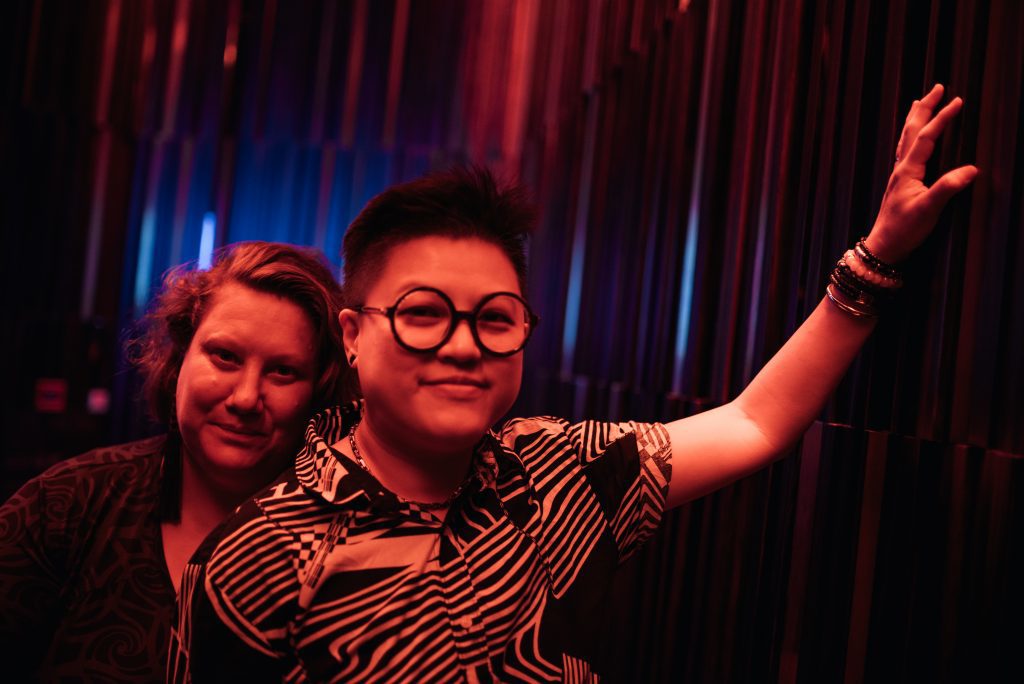
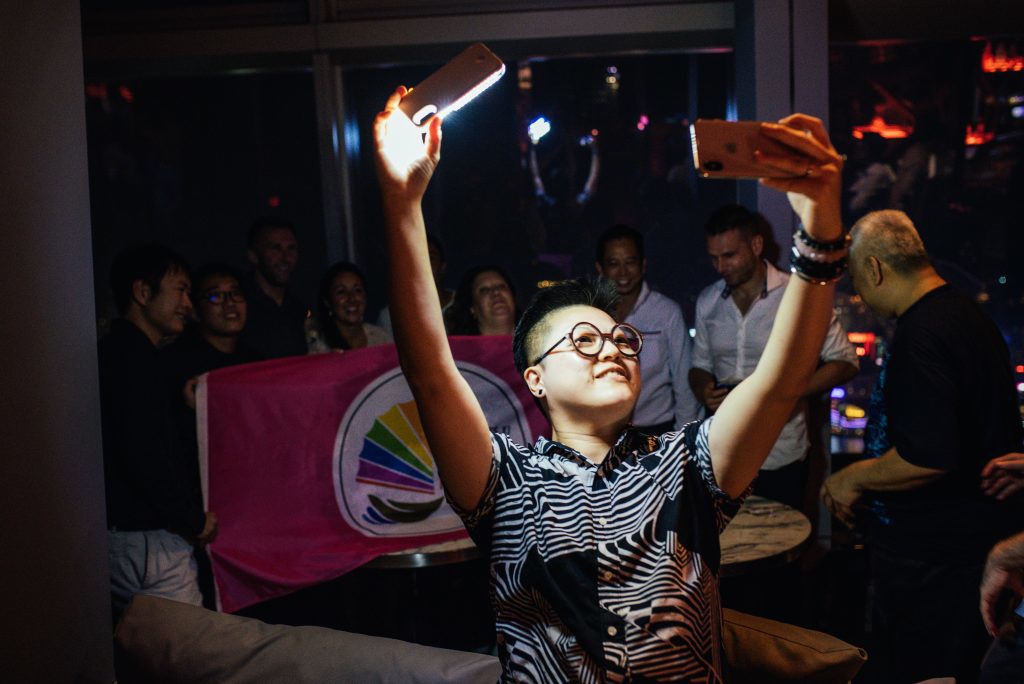
The view from Hong Kong’s Ozone Bar – one of the highest lounges in the world to quaff a cocktail – is staggering. Located on the 118th floor of the Ritz Carlton in West Kowloon, the 180-degree window looks down onto the tops of skyscrapers, providing a view typically reserved for the airborne. On this hazy and humid spring evening, Abby Lee and Betty Grisoni are seated in a roped off table by windows, sipping on $40 dollar cocktails.


Students of history know that many iconic movements began as mere ideas batted around by a few people at their local pub. In that spirit, Lee and Grisoni aren’t merely drinking with some acquaintances at the top of the world — they are planning something special, something unprecedented in Hong Kong. They are bringing the Gay Games to Asia for the first time ever and they are meeting with the organizing committee.


“We’ve become a role model.”


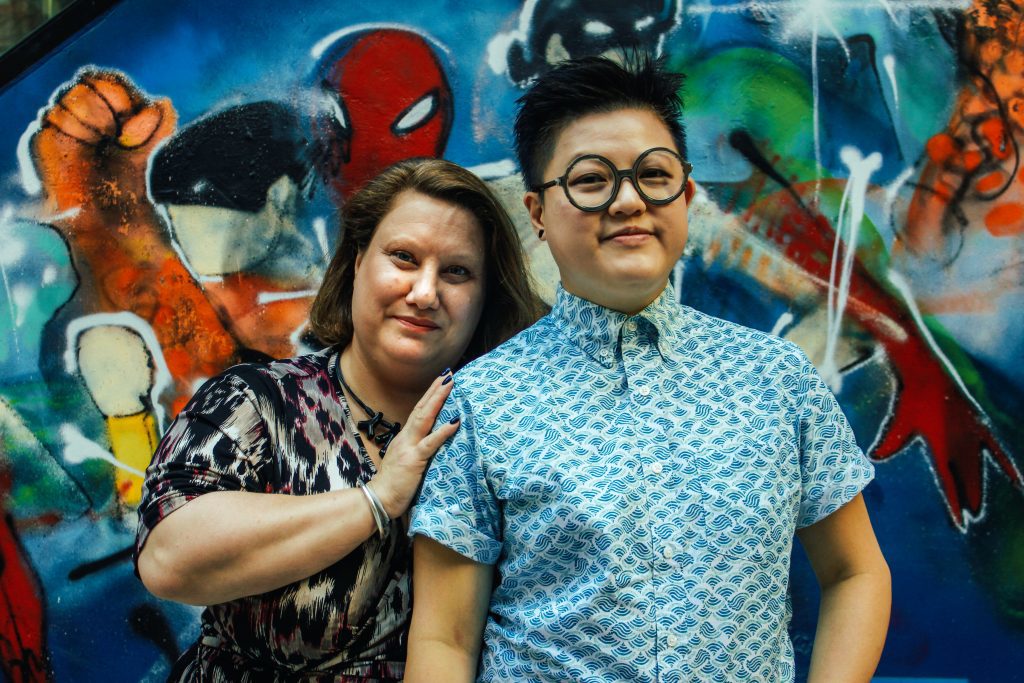
In Hong Kong, Lee and Grisoni are considered the power couple that started the city’s top meetups for queer women to attend: Le Pache (named in part due to the resemblance a split peach has to a part of the female anatomy) and Pink Dot, a “free, fun, non-political outdoor concert and carnival organised for allies, families, friends, and colleagues of LGBT+.”


Landing the Gay Games in 2022 is just another of their major accomplishments. This global event takes place every four years. This event, which began in San Francisco in 1986, has since been hosted by cities such as New York, Amsterdam, and most recently, Paris. Organizers estimate that nearly 15,000 athletes and 40,000 spectators will participate in the festivities, bringing up to $170 million into the local economy. The financial boon is certainly good for the city, but more importantly for Lee, the event will bring some much needed visibility to the various LGBT+ communities of Hong Kong.


“A lot of the homophobia and transphobia here is because those people don’t know us. Because a lot of us are hiding,” said Lee. “In Hong Kong, women tend to be more discreet about their private lives. That doesn’t mean they are not out, but they have a very small circle of friends.” For Chinese individuals, keeping their private lives to themselves is deeply ingrained in the culture, according to Lee. She says this has allowed a small but vocal social-conservative Christian community to spread stereotypes and misinformation.


Lee and Grisoni, who’ve been together for almost 20 years, said making their long-term and biracial relationship public has been an important part of their activism. “We’ve become a role model. Some people say to us, ‘You’ve had a longer relationship than our straight friends.’”


According to them, visibility is the way to fight stereotypes and the isolation often felt by those in her community. “The gay games can help educate people who don’t know the LGBT+ communities in Hong Kong. But not only that, we are showing a different image of Hong Kong to the whole world.”


The drink glasses sit empty on the table. The meeting wraps up with a photoshoot of the group holding up the official Gay Games flag over a view of the city’s seemingly endless skyline.


MAIDS OF HONOUR

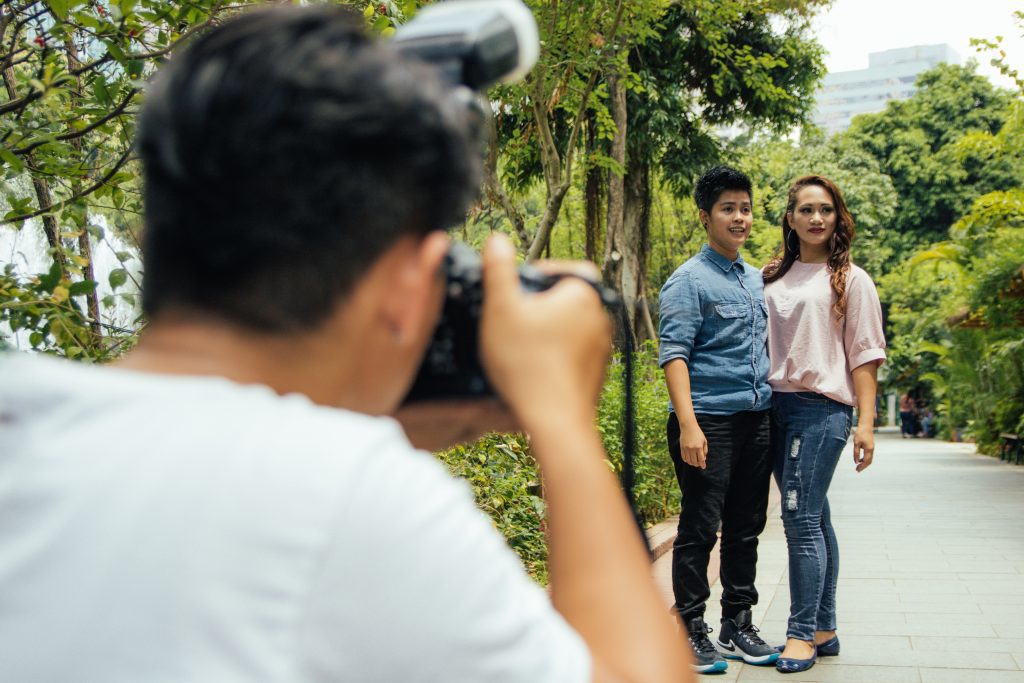
Sunday’s are the maids’ day off in Hong Kong, as tens of thousands of domestic workers gather at the park to socialize and relax after a hard week. On the first Sunday of June 2018, I was at the Hong Kong Zoological and Botanical Gardens – an old-school zoo with monkeys, apes, birds, and a mix of exotic plants and trees.


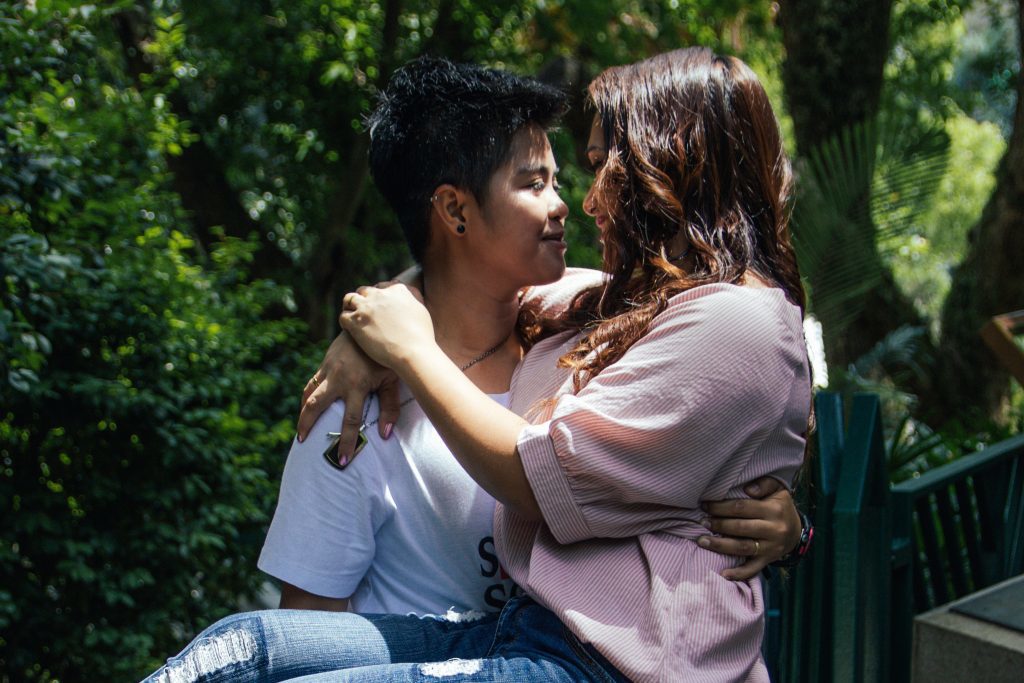
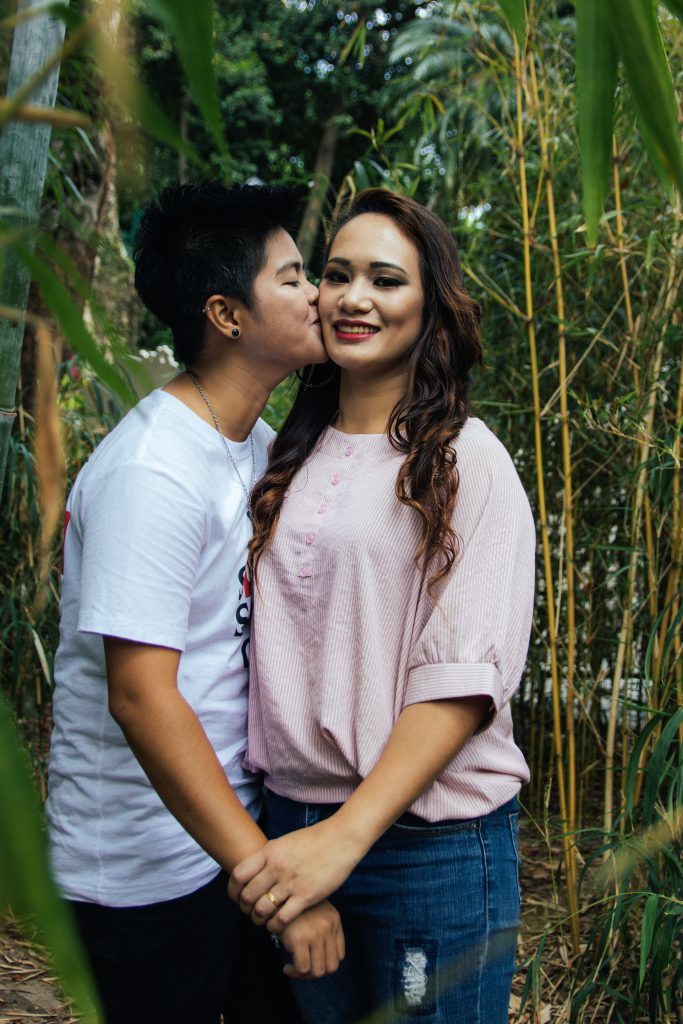
I sat in the dense tropical shade with Noreen Apatayo and Jonalyn Anildes – one of six Filipino lesbian couples who’d chosen this time and place to take their engagement photos. Although same-sex marriage is not legal in Hong Kong, they pooled their resources together to hire a team of professional photographers in anticipation of their upcoming matrimonies.


Hong Kong is one of the world’s leading international financial sectors. This has led to a sizable middle/upper class supplying the demand for a migrant domestic worker industry consisting of 360,000 people – almost five per cent of the city’s population. These migrants prefer the term “workers” over “helpers”, as reports of slave-like conditions and inhumane working conditions often faced by the predominantly Filipino or Indonesian women can make the latter term feel insulting.


The number of domestic workers who have same-sex relationships is unknown, but it’s estimated to be unusually high. In the case of Indonesian domestic workers, the rate is 20 per cent. When I asked Apatayo and Anildes why there was huge instance of same-sex female relationships amongst domestic workers in Hong Kong, they said being away from the judgement of their families and relatives at home was a factor.


“[In Hong Kong] they don’t care. Not like in the Philippines. You have your cousins there, they are going to tell your parents. In the Philippines, you need to hide,” said Apatayo, who met Anildes two years ago at a Pink Dot event. Anildes’ employer, a single mother, encouraged her to go check out the event. She told me she thinks this was her employer’s discreet way of acknowledging, and accepting her sexuality.


Apatayo hasn’t come out to the family she works for. She worries that her employers – both police officers – may not be as accepting, especially because they have a young daughter. “I don’t want them to think negatively about me being around their child,” she said.  


“We all need a partner.”


Regardless, Apatayo and Anildes chose to go ahead with the marriage. They agreed that it’s important for them to move on with their lives, as they don’t see a future for themselves in Hong Kong. “Maybe we are not here in 10 years,” Anildes said. They’d like to move to Canada, or back to the Philippines – anywhere they’d have a more work-balanced life. One day a week isn’t enough to see one another they say, as they are required by law to live in the house of their employers. “We want to have time for us. We don’t like to just keep on working.”


They hope their unsanctioned marriage will show people in Hong Kong that true love exists for everyone, including migrant workers – who they feel are often ignored and unacknowledged as equal members of Hong Kong’s society. “We just want others in Hong Kong to know that we all need a partner. We want that Hong Kong respects us, even if we are ‘domestic helpers.’”


CHANGING LABELS


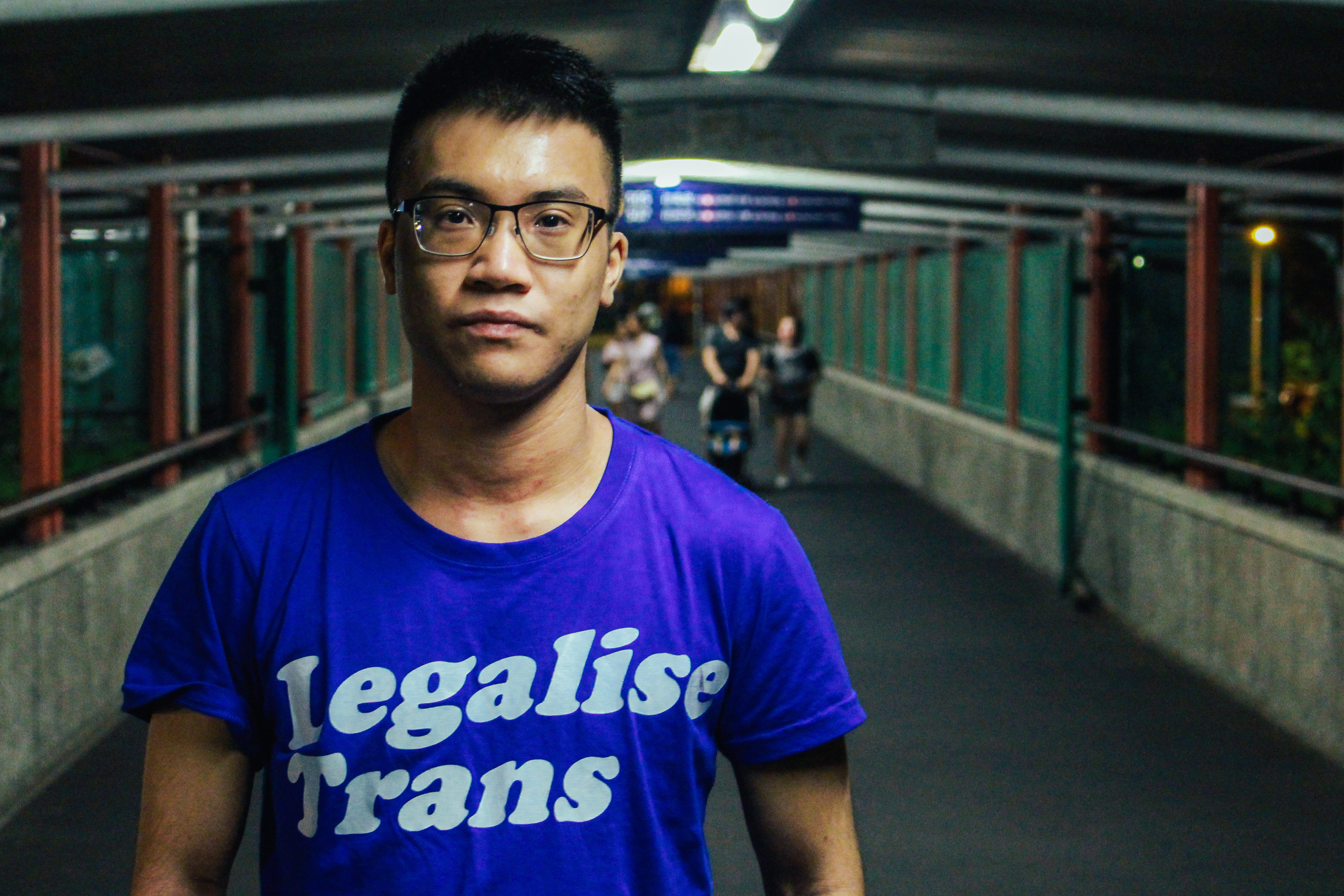
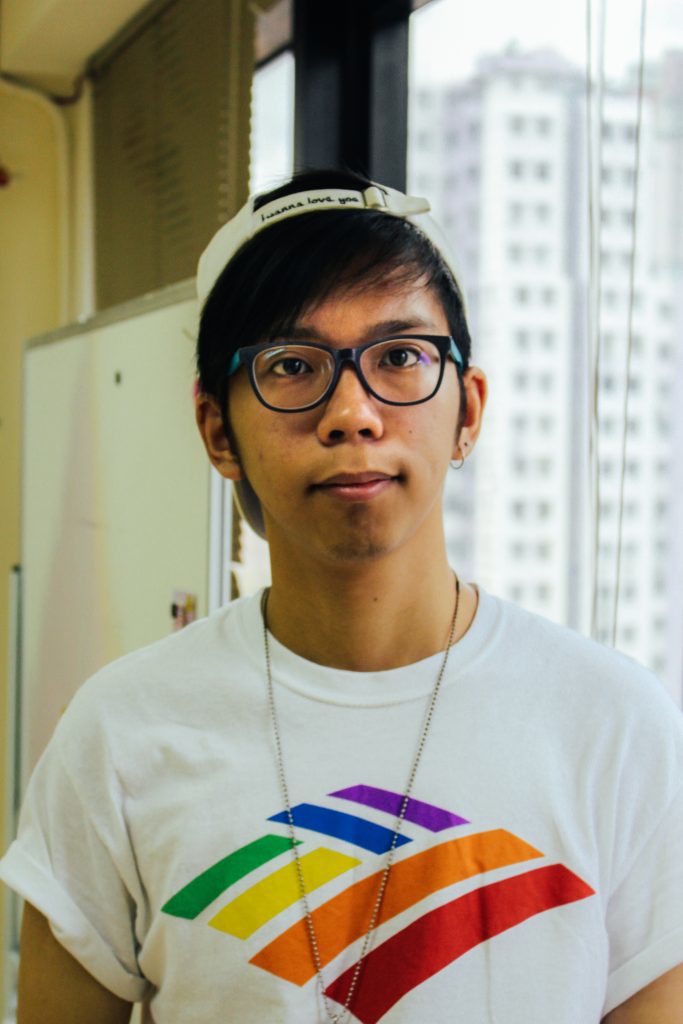
Even in a place as crowded as Hong Kong, Henry Tse stands out. Not many people here would wear a bright blue t-shirt adorned with bold white text reading: “LEGALIZE TRANS.”


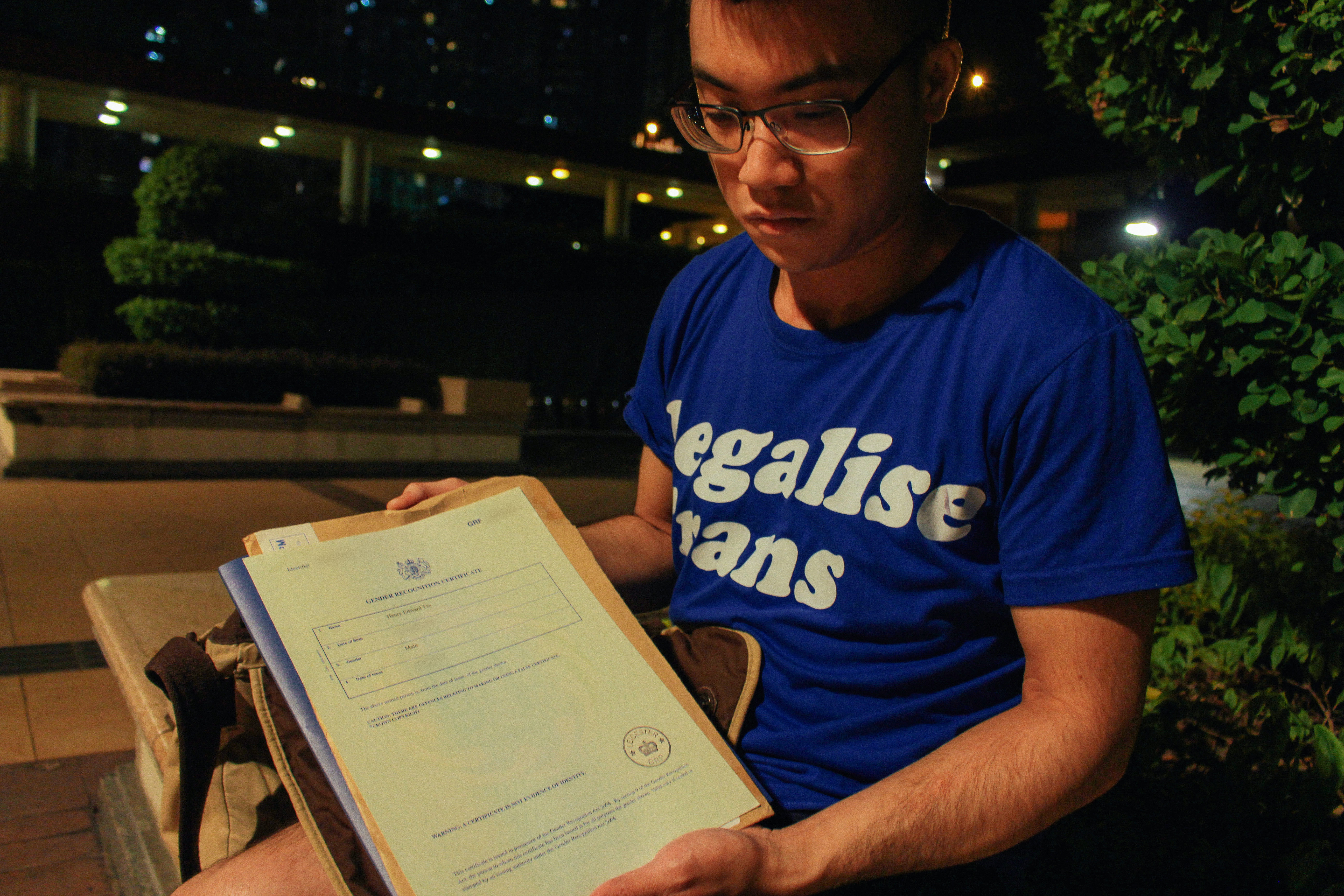
Tse is part of a group of three female-to-male transsexuals who earlier this year each filed for a judicial review of their applications to change their sex on their gender card – without undergoing complete sexual reassignment surgery. Currently, they are required to remove their uterus and ovaries and construct a penis in place. He doesn’t think it should be necessary to undergo such a potentially risky surgery that could take multiple operations to complete.


“Why should I have to cut open my stomach in order to live my life in Hong Kong?” Tse asked. Unlike in the U.K., where Tse spent his teenage years and early adulthood, an ID card is essential for most day-to-day activities in Hong Kong. However, due to the lack of visibility and understanding of transgender identities, he often feels scrutinized for being labelled as “female” on his card.


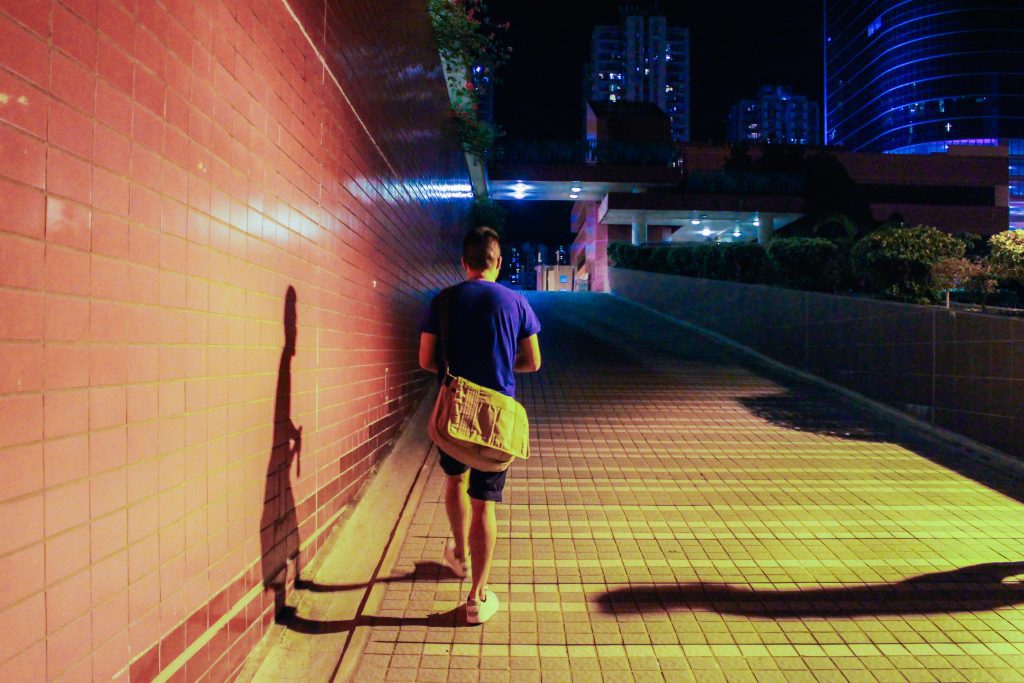
“They always have a lot of questions. Like if I’m at the bank, and it’s busy, everyone in the line begins to wonder why I’m taking so long. The people looking at my ID often think it’s counterfeit,” Tse explained. For this reason, he doesn’t have a cell phone plan or a gym membership. He loves to swim but avoids public pools. And he stays away from public washrooms at all costs, due to reports of civilian and police interrogations of trans people entering them. He’s staying at an LGBT+ safe house in the New Territories, the location of which he asks to remain undisclosed as a requirement to stay there.

“Why should I have to cut open my stomach in order to live my life in Hong Kong?”

In spite of his general lack of participation in day-to-day activities in public, he’s pushed his way into the spotlight in order to fight for his rights, having shown his face in articles, on television, and in court.


Tse unzips his backpack and removes the gender reassignment certificate given to him by the British government. His goal is for Hong Kong legislators to pass something similar to the U.K.’s Gender Recognition Act, which reduced requirements so that other criteria, such as a clinical assessment, were enough to get state approval.


He believes that many people don’t support this change in laws because of the strong campaign of anti-trans rhetoric put forward by a segment of the Christian community. He believes the only way to fight this ignorance is to put his name out there – being the only one of the three trans men applying for a judicial review of their applications to make their name public. 


THE RAINBOW UMBRELLA


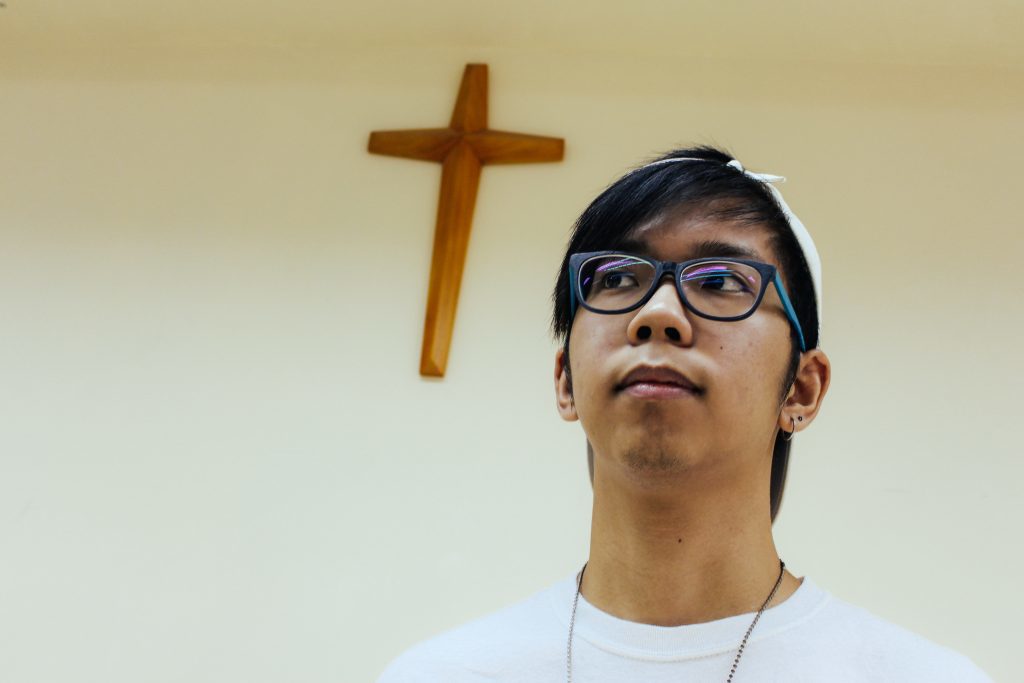
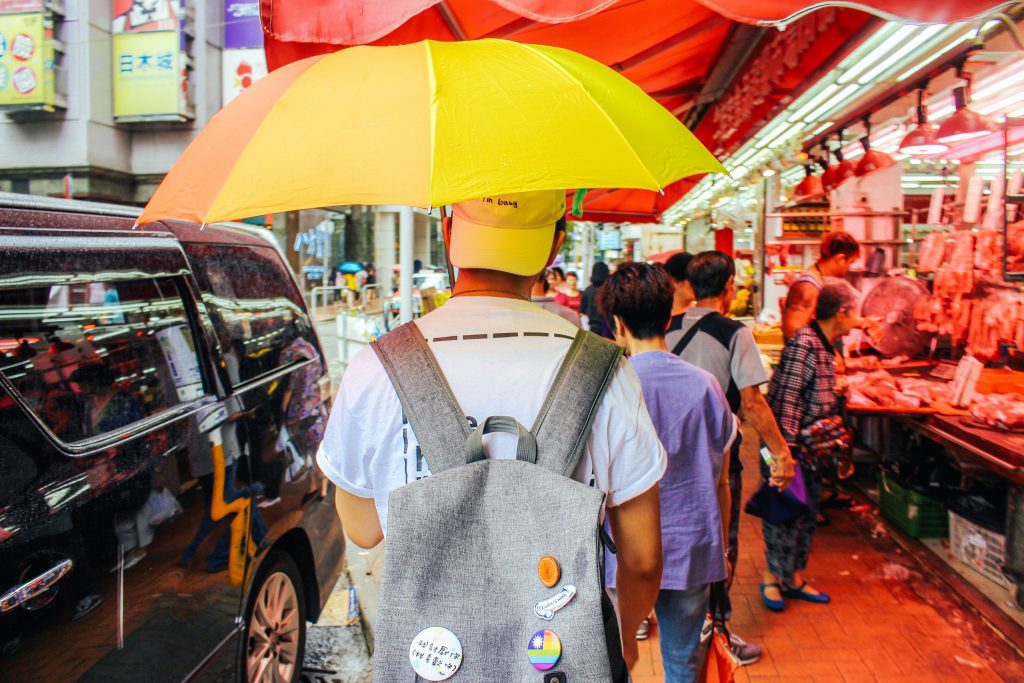
Sunny Leung carries a rainbow umbrella as he heads to his parent’s church. Leung is a self-identified gay Christian, which he says is something new in the eyes of Hong Kong society.


As a gay Christian, Leung has had to deal with a number of barriers – the first being to find acceptance with himself. His initial reaction to having same-sex attractions was to voluntarily attend one of the what he calls “conversion camps”, which are intensive spiritual workshops run in Hong Kong by groups such as the New Creation Association. During their sessions, he was taught to “pray the gay away.” When that didn’t work, he was told he could reconcile the conflict between his beliefs and his sexuality by abstaining from intimate relationships. Saying that he could never fall in love made him realize there was a problem. According to his beliefs, everyone is deserving of love.


His next step was getting through to his parents, both of whom are pastors. He says they’ve started to come around to the idea of having a gay son, focusing on the fact that he is a dedicated Christian, and “is good to others”. The biggest challenge now comes from the situation this puts his parents in, as widespread knowledge of his sexuality could trivialize their positions within the Church.


In spite of these challenges, Leung isn’t worried about the future of LGBT+ rights in Hong Kong. Many of the issues, he explained, come down to a matter of generational differences. “In Chinese society, we love harmony, we don’t like messy things,” said Leung. He explained that the older LGBT generation felt compelled to keep things peaceful, and to not speak out. He said this mentality directly contradicts the political activism being pushed by students across the country, and within the LGBT+ community with leaders like Raymond Chan, the first openly gay member of the Legislative Council of Hong Kong.


“The older LGBT people don’t like him very much because they think he’s making a mess,” he said. Those groups believe that Hong Kong is peaceful, so it’s not good to rock the boat. “But Hong Kong is already messy. Maybe it’s okay to be more messy in order to fight for more rights.”


Leung has chosen to fight and to do so with “compassion and love.” For him, that means exposing Christians in Hong Kong to the real stories of LGBT Christians, which he’s been recording and sharing on different Christian social platforms.


[/vc_column]


I am building a bridge between the church and the LGBTQ community – in order for these two groups to have a chance to communicate, to have a chance to interact with each other,” said Leung.


He explained that stereotypes of LGBT+ people being diseased and promiscuous have been spread by the Christian Church of Hong Kong. He believes that hearing stories from real LGBT Christians in Hong Kong will cause the influence of the Church’s vitriol to wane. I asked him if that made him an ambassador for others like him. After a pensive moment, he responded:


“I’m just being a simple gay Christian man. Not an example, not a good or bad example, just me. Just myself. 


Behind the Byline


People I interview consent to do so consciously. They are responsible for the words they choose and for being in photos I take. But there’s no way I can ensure these stories won’t negatively impact their lives.

Noreen and Jonalyn are in a precarious situation. Noreen’s employers are both police officers, and their marriage could land them in trouble with their visas or work status. It’s not ideal for them to go back to the Philippines, given it’s predominantly socially conservative Catholic society. The same thing goes for Sunny, whose parents hold prominent positions in the Christian Church. 


Through their brave decisions, all of my sources are leading examples of hope within their respective communities. By having their voice out there, they are legitimizing the experiences of many who don’t feel ready to publicly come out as who they are. And, as Betty and Abi said, this is the best way to fight the campaigns based on ignorance that are often led against their community. But I’ve struggled with deciding whether that is worth the individual and personal costs they risk facing. 

Previous Next
Close
Test Caption
Test Description goes like this