DAI PAI DONGS: food, culture and a dying Hong Kong relic

To view this 360 video on mobile and/or with a headset, click right here.


BY STEPHANIE LIU


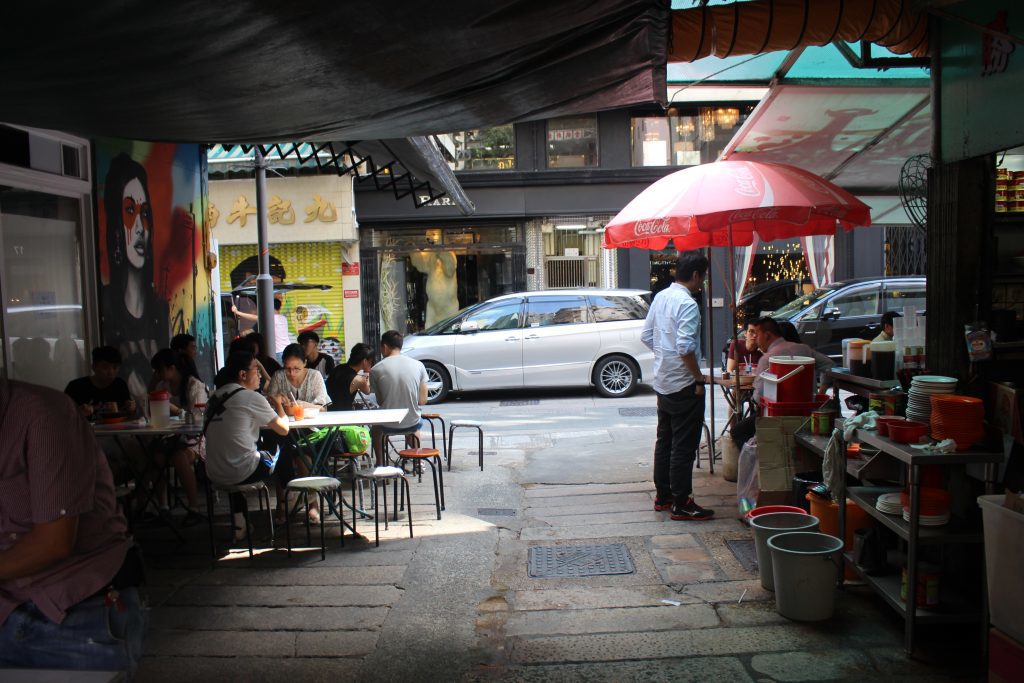
The Western Kowloon neighbourhood of Shek Kip Mei Street is flooded with hungry Hong Kongers as the sun begins to set. The city is going through one of the hottest summers they’ve had in decades, but almost every table at Oi Man Sang Kitchen has a plastic red stool with someone sitting on it. The tables are crowded with plates of everything in between stir-fried noodles to sautéed greens. The tantalizing aroma of sweet and sour pork can be detected from a block away. In the cooking area, pigeons are defeathered and marinated with a mix of spices.
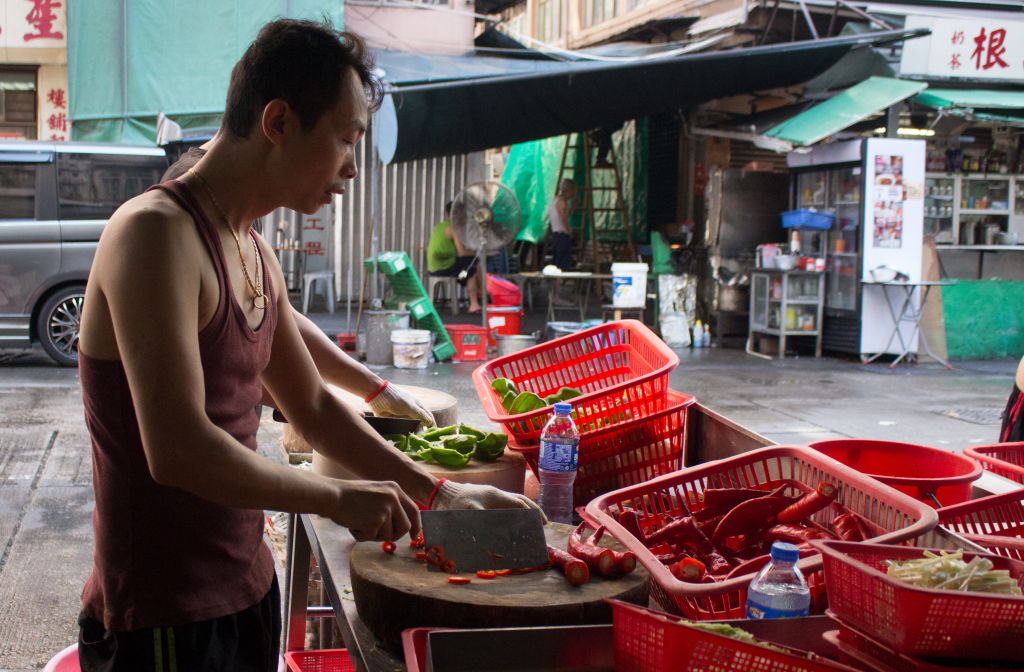
Kitchen staff at Oi Man Sang spend the day preparing for customers (Stephanie Liu/RSJ).


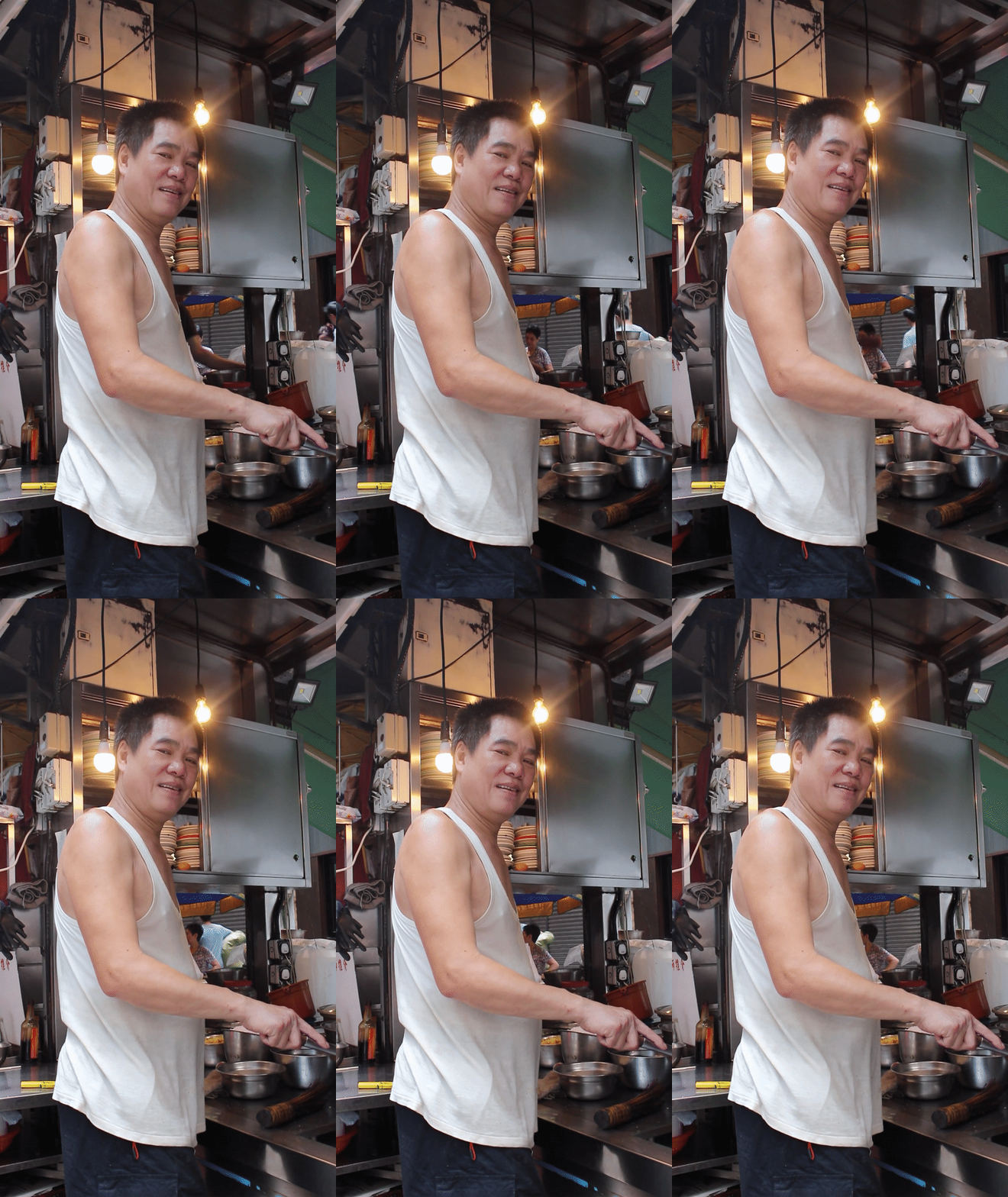
The line cooks at Oi Man Sang spend their day preparing for when the restaurant opens in the evening. While most of the cooking is done in the open-air kitchen, other tasks such as wrapping dumplings and making rice is prepared in the kitchenette by the indoor dining area. While preparing for the night, the cooks use an axe-like knife to chop vegetables of all sorts – baby bok choy, button mushrooms, bright red peppers – palm-sized fish with grey scales end up on the large wooden block every so often. You can tell when they’re preparing the fish, not just from the splitting sound of when the knife strikes the board, but also from the lingering scent of sea water brine. As customers start occupying the tables, the tall chef hiding behind the steel countertop tosses the fish and vegetables together in a wok that sits over scattered flames. Oi Man Sang, one of the only dai pai dongs left on the street, stays buzzing with customers from 6 p.m. till past midnight.
 

A cook at Oi Man Sang takes the fish from a tank of water and prepares it on the chopping board (Stephanie Liu/RSJ).

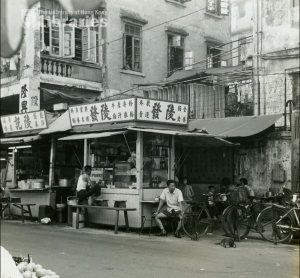
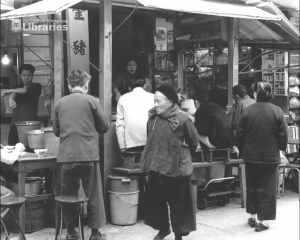
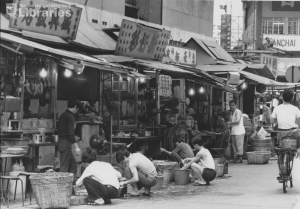
Dai pai dongs are restaurants in the middle of a street. In the 1950s, they were popular venues for cheap eats and fresh food, but now, Oi Man Sang is one of the last dai pai dongs left in Hong Kong.


Throughout the night, there’s a petite lady with fine grey hair pacing around the dining area and peeking over the kitchen counters. Love Lam, 87, is the owner of Oi Man Sang. She opened the dai pai dong back in 1956 and named it after her two sons. She isn’t always at the restaurant but on days where she is, she spends a lot of her time chatting with customers. She mentions the awards her restaurant has won and beams with pride about her achievements, especially considering she’s a woman. As one of the last dai pai dongs left in the city, Lam says she is “very very lucky” that the government didn’t shut her restaurant down years ago when they were trying to clear the streets.


“The government didn’t like how they [dai pai dongs] were on the streets and blocking traffic. I was lucky they didn’t close mine down,” she said. “Today there’s only about 20 of them left. They closed all of them on this street except for mine, so I’m very very lucky.”
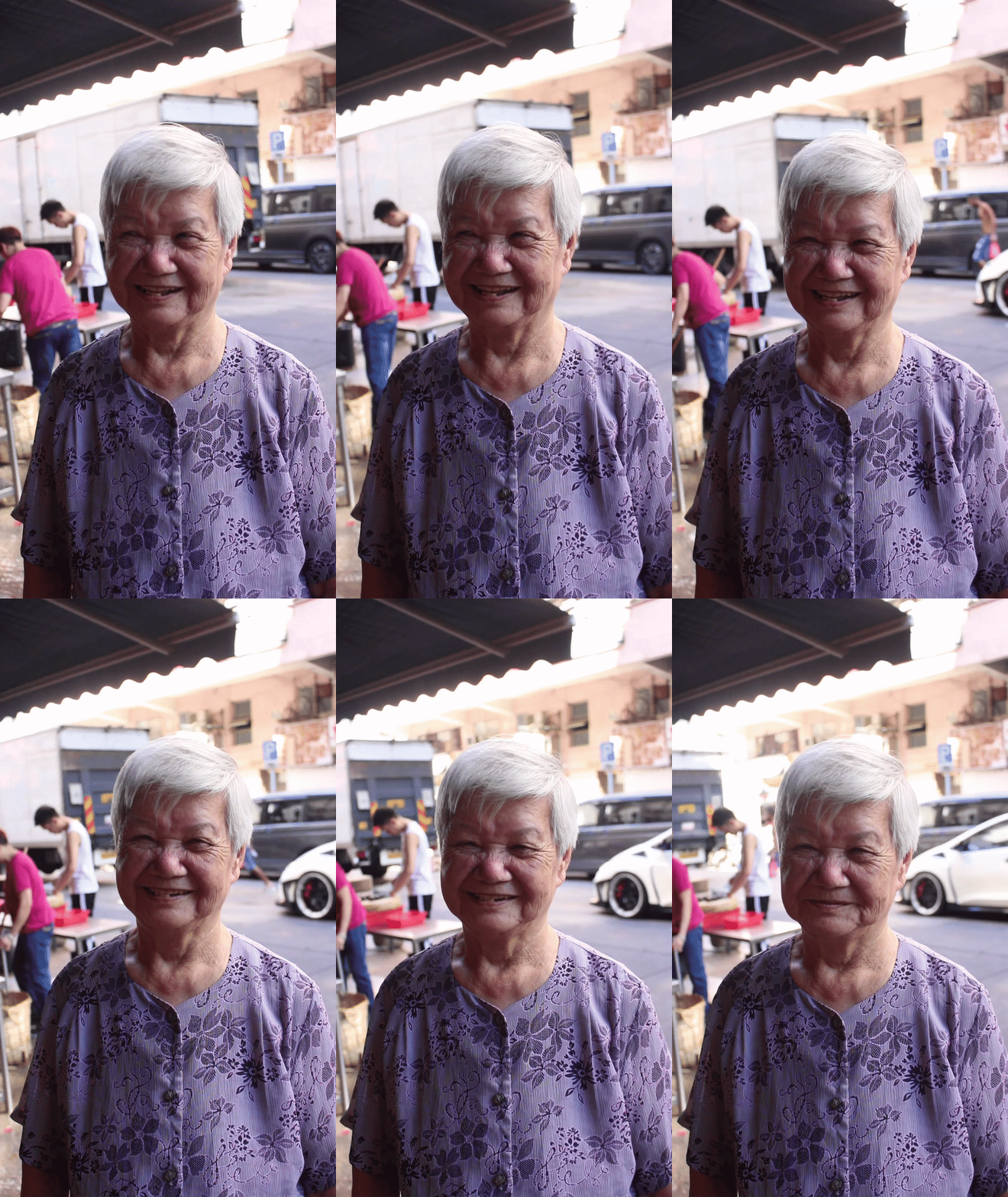
“Today there’s only about 20 of them left. They closed all of them on this street except for mine, so I’m very very lucky.” 
– Love Lam, owner of Oi Man Sang Kitchen.


For much of its history, Hong Kong was a lively but modest fishing village and maritime port. People didn’t have much money to spend on lavish meals. But, led by a massive manufacturing boom in the early 1960s, Hong Kong’s economy exploded.


“As the economy grew, Hong Kong started to develop into a modern city, a financial central and Asia’s world city,” said Carol Lee, a representative from the Hong Kong Tourism Board. “New housing, buildings and malls were being built. It was important to keep the roads clear with a good control of food safety.”


The government stopped issuing new dai pai dong licences in the early 1970s because of traffic congestion, food safety issues and noise complaints. Some dai pai dongs were relocated into indoor “cooked food centres” where the government could better enforce food handling practices. To further reduce the presence of street restaurants, the government proposed to dai pai dong owners that they forfeit their licences in exchange for money.


A dai pai dong in an alleyway on Mee Lun Street, Central (Stephanie Liu/RSJ).

But, as people became wealthier, the cultural attitudes of Hong Kongers changed as well. Cultivating a sophisticated image became a priority for many people in the city. French fine dining became a popular choice for those who could afford it. Western outlets like McDonald’s and KFC arrived on the scene providing fast and cheap food, however, they were also embraced by many as symbols of a modernizing Asia. Dai pai dongs used to be widely accepted places for dining, but today many locals are hesitant to go because they’ve come to be seen as dirty and unhygienic.


There remains a loyal following that still frequents what is left of Hong Kong’s traditional dai pai dongs. How long this following will last is anyone’s guess.


“I love dai pai dongs. It’s a group of people getting together and sharing. We sit outside and the food is so good. It’s definitely better than normal restaurants,” said Vivian Kong, a Hong Kong native that has moved to Toronto for her studies. “It’s a big part of our culture, so I’m really sad they’re disappearing. I used to go to this one in Fo Tan, but I doubt it’s still there.”


Though dai pai dongs are falling into the stream of dying industries in the city, some owners say they continue to work in this field because it plays a huge role in Hong Kong’s history and they want to keep the legacy going.


“I’m happy that my dai pai dong is still in business because us old-fashioned people can stick around and continue working,” said Dan Yue, owner of the Yue Hrng Coffee dai pai dong. “If us second generation people don’t continue to do this work, there will be a total loss in dai pai dongs. In 20 years I know it’s going to die, but I hope we can save it.”

“I know it’s going to die, but I hope we can save it.” 

– Dan Yue, owner of Yue Hrng Coffee.


Not all dai pai dong businesses are suffering. Love Lam’s Oi Man Sang is swarming

Chefs at Oi Man Sang prepare food in the outdoor kitchen (Stephanie Liu/RSJ).

with customers seven days a week. Her dai pai dong has become so busy that a couple years ago she bought four storefronts on the street and had the walls demolished in between them to create one large indoor dining area.


But most dai pai dong owners, many of whom have been serving up street eats from a young age, know no other life and are facing challenges of economic instability.


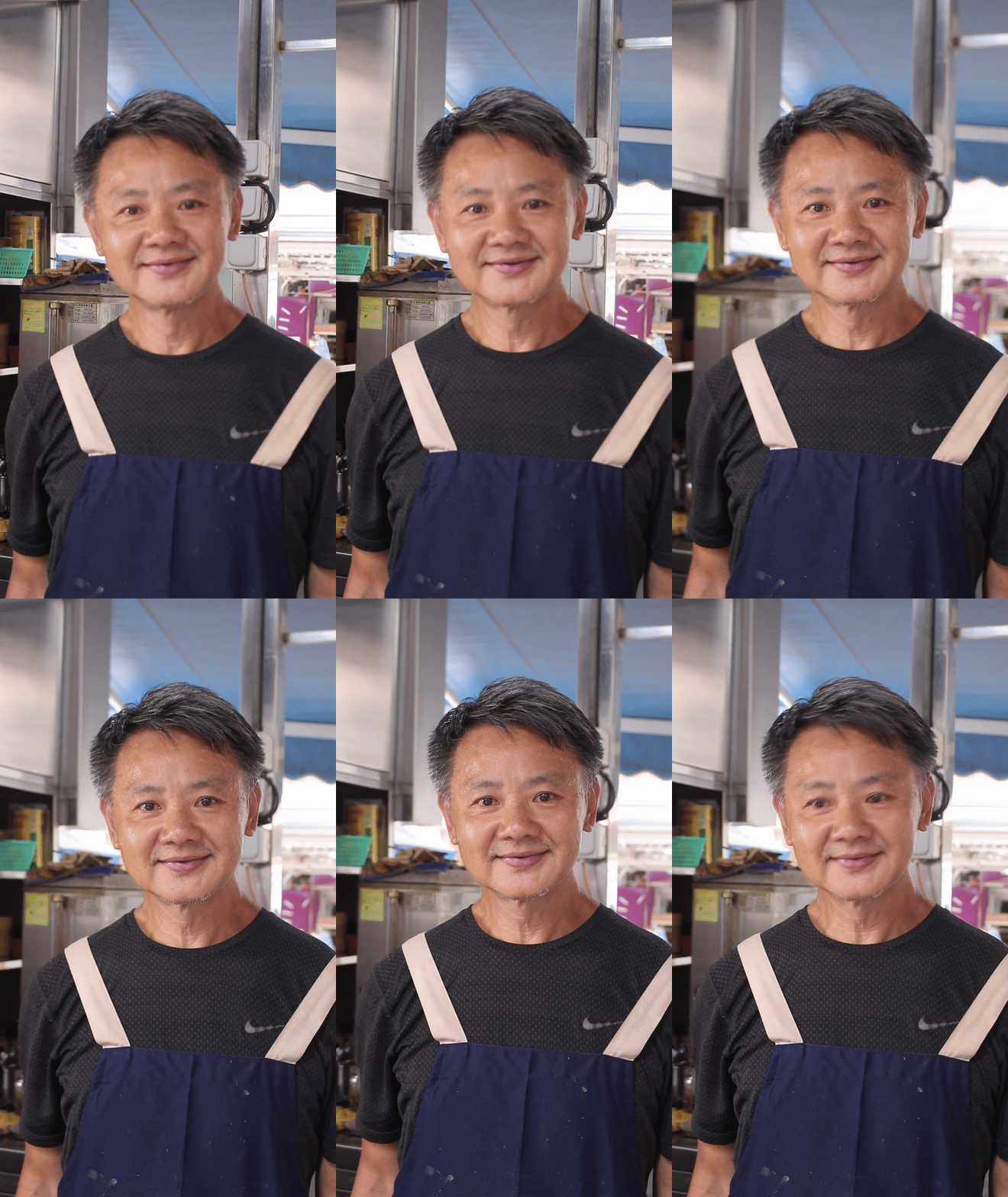
“Because we [dai pai dong owners] are older now it’s hard to switch industries, so we continue to work dai pai dongs to support ourselves” said Lan Chi Sing, owner of the Shing Kee dai pai dong.


Stir-fried clams is a common dish on many dai pai dong menus (Stephanie Liu/RSJ).

His rustic restaurant is tucked away in an alleyway in the Central neighbourhood, one of Hong Kong’s most glamourized business districts. While the numerous Michelin starred restaurants surrounding him are cashing in big bucks from power-lunching bankers, Sing’s profits are far more modest. However, he says that this doesn’t matter to him.


“Even though we don’t make much money doing this, I get satisfaction from cooking good food for people. There are just some things that money can’t buy.”

“Even though we don’t make much money doing this, I get satisfaction from cooking good food for people. There’s just some things that money can’t buy.” 

– Lan Chi Sing, owner of Shing Kee.


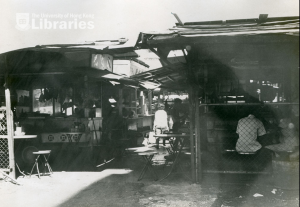
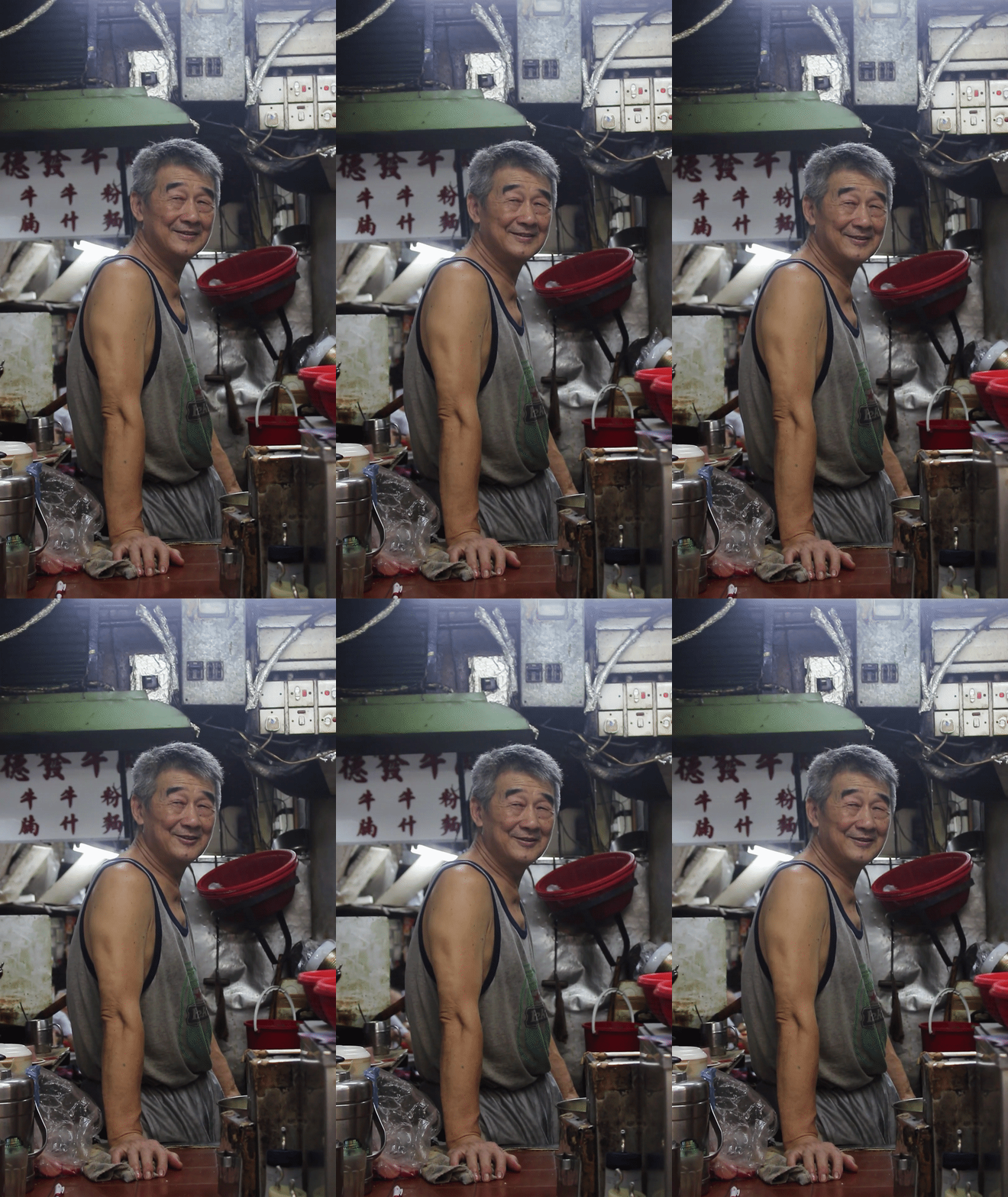
At the corner of Haiphong Road is a building with an open gateway and steel bar fencing. Inside is one of Hong Kong’s oldest fresh food markets. If you go past the aisle of flower stands in the market, you’ll find about a dozen dai pai dongs crammed into a small section at the back of the building. Many of the stands have a thick lining of dust building up on the edges of the storefront signs, with some even covering parts of the Chinese characters in the centre. Other than the natural sunlight that seeps through the cracks of the metal sheet ceiling, the space is dimly lit. This is the Haiphong Road Temporary Cooked Food Hawker Bazaar: an indoor food centre that has sustained the business of many dai pai dongs in Hong Kong.

A look inside the Haiphong Road Temporary Cooked Food Hawker Bazaar (Stephanie Liu/RSJ).


Fad Hang is the owner of Ma Kwan Por, one of the dai pai dongs located in the indoor food centre. He’s been working in the industry for approximately 50 years now and says that he and other owners have already accepted the dying reality of dai pai dongs.

“We won’t be able to survive out here,” he said. “I’m 68 now and I’m going to retire soon. I’ve been doing this from when I was small until now, so I definitely feel something towards the closing of dai pai dongs.”

“We won’t be able to survive out here.” 

– Fad Hang, owner of Ma Kwan Por.


When owners like Hang retire, the only way they can keep their business running is by passing down their licence to an immediate family member, otherwise the licence will be voided and the dai pai dong will be closed down.


“That was intentional. The Hong Kong government never wanted street food to be a permanent feature of the city,” said Daisann McLane, director of local Hong Kong tourism agency Little Adventures in Hong Kong.


Despite this large restriction the government has put on the dai pai dong industry, McLane thinks that dai pai dongs can still be saved and moving them indoors is “not necessarily a bad thing.”


“The dai pai dong is a key cultural memory for Hong Kong people,” she said. “While the indoor food courts lack the atmosphere of the outdoor dai pai dongs, they still preserve the tradition of cheap, democratic food that anyone can afford.”


While most owners are moving their restaurants indoors, Love Lam is one of the more fortunate owners who has been able to keep her dai pai dong running on the streets. There are only a handful of dai pai dongs left in Hong Kong, and with Oi Man Sang being one of them, Love Lam says she wants to keep her open-air restaurant around for as long as possible.


“Now there’s not that many dai pai dongs left in Hong Kong, only a couple are left,” said Love Lam. “Back in the day there were hundreds of them until the government started buying them back, but I didn’t let them take mine and I won’t let them take mine.” 

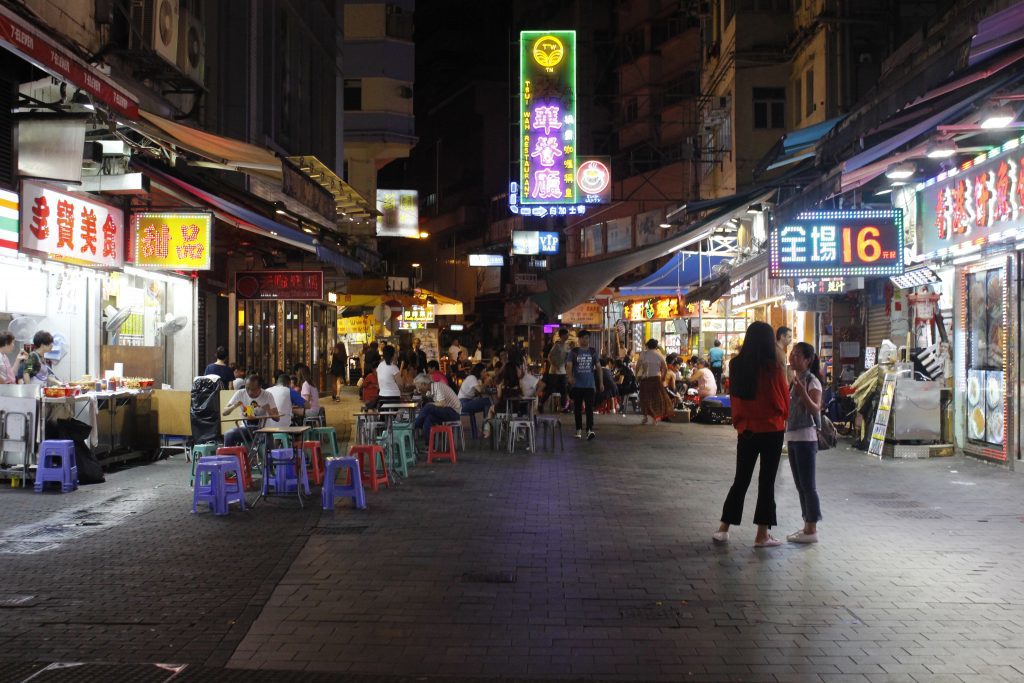
Temple Street is one of the few areas left in Hong Kong that is densely populated with dai pai dongs (Stephanie Liu/RSJ).


*Quotes are translated from interviews that were conducted in Chinese.*


Behind the Byline


When I was first faced with the idea of reporting in Hong Kong, I was definitely excited but nervous at the same time because we are reporting in a foreign country after all. But you know that warm, happy feeling you get when things just go beyond your expectations? Well, that’s what happened to me when I met the main dai pai dong owner in my feature, Love Lam.


The first day I met her, she was extremely shy and reluctant to speak to me. We probably talked about everything other than her dai pai dong for the first 30 minutes of our conversation. Even afterwards she was still nervous to speak to me. Eventually, we warmed up to each other and she even shared some of her personal experiences of living in Hong Kong.


Two days later, I went back to Love’s restaurant with the rest of my team. Just seeing how overwhelmed with joy she was to see us visit her made me realize the power of creating relationships. I’ve noticed that a lot of times when we report, we interview people just for the sake of interviewing them. Journalism should be about understanding people’s experiences and connecting the community through the stories we tell. Going to report in Hong Kong was never about reporting on a high-profile, ground-breaking story. It was about making connections with people and sharing their experiences; it was about giving people a voice who don’t have one in mainstream media and viewing things from a different perspective.


Creating this story really made me think about our role and responsibilities as journalists. It also pushed me to be more creative and to think outside of the traditional ways of storytelling. Lastly, it gave me the confidence to reach out and connect with people. I mean, if I could interview people in a foreign country, what can’t I accomplish? 


Previous Next
Close
Test Caption
Test Description goes like this