TRADITIONAL CHINESE MEDICINE in modern Hong Kong life

by Aurora Zboch

1: Welcome to Medicine Street

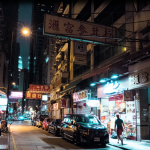
Chiu-hing Tsang spends long hours at the back of his herbal shop on Medicine Street. In the 50-year-old shop, shelves are stocked with jars labeled with the names of herbs and dried foods. The earthy scents of roots and seafood become ubiquitous after a short walk down Ko Shing, better known as Medicine Street. Nearly every store, it seems, has its own cat greeting customers or sleeping on boxes. Neon signs flicker above shop windows and the street becomes a crossroad splitting into others named after traditional medicines: Bird’s Nest and Ginseng Streets.


The shop, originally owned by Tsang’s grandfather, is one of many family-run Chinese medicine stores on Ko Shing Street in Hong Kong’s central district of Sheung Wan. He explains it’s the industry he’s grown up in.

“Most of these are refined by ourselves,” Tsang says, watching an employee chop ginseng among other tea ingredients. The yellow bamboo-like pieces fall around the counter then are tied into small bundles for sale. Behind the counter, glass cases are filled with pricier items like bird’s nest, the opaque protein hailed for its nourishing health benefits.

2: Traditional Chinese Medicine (TCM)

Traditional Chinese Medicine (TCM) has been practiced for thousands of years and uses the concepts of yin and yang, and the five elements to signify balance in the body. It is a holistic approach, recognized as alternative medicine in the Western world, but is widely practised in the East and the West. In its essence, all illness can be traced to imbalance, deficiency, excess or being too hot or too cold. TCM has over a century of history in the Sheung Wan district and on Medicine Street, and TCM is fully integrated with Hong Kong’s health care system.

Western medicine was first introduced to Hong Kong in a research centre and hospital in Sheung Wan during an ongoing plague outbreak in 1904. Since then, Sheung Wan has been a place where TCM and Western medicine have been practiced side by side and have slowly integrated.


From herbal remedies to acupuncture, TCM has great importance in trade and health practices in Hong Kong. There are over 7,200 registered Chinese health practitioners, and practices include pain management, gynecology, and preventive nutrition.


Lixing Lao is a professor and director of the School of Chinese Medicine at the University of Hong Kong (HKU). Lao notes that “About 20 years ago, before Western medicine came to China, Chinese people only used Chinese medicine. So it’s our main medicine, actually, until recently [when] Western medicine became more popular.” In Asia, Chinese medicine is deeply rooted in culture through tea and food that serves to boost general health as well as treat illness.


The Hong Kong Museum of Chinese Medicine is surrounded by traditionally used China roses, hibiscus flowers and Chinese lemon trees in a garden within the looping gates and backstreets of Sheung Wan. Students on field trips examine the plants, write in their notebooks and then travel in small groups inside the brick museum. It was built in 1904 as the first biomedical research centre to tackle the plague epidemic which had, at that point, afflicted Hong Kong for 30 years.


In the 1950s the Chinese government began encouraging the integration of Western clinical medicine with TCM. Prior to 1997, the British-controlled Hong Kong government allowed Chinese medicine to be practised without regulation. After the handover of Hong Kong back to Chinese control, a licensing board and registry of TCM practitioners were implemented so that the government could regulate the industry, monitor and restrict malpractice. The government has also funded clinics to offer more services to Chinese citizens, and all public hospitals have official TCM departments.  


In Hong Kong, the legitimacy of Chinese medicine goes without question and there are strict regulations on retailers, prescriptions and licenses. The regulations are set by the Chinese Medicine Council of Hong Kong (CMCHK). The requirements to become a Chinese medicine practitioner include a minimum five-year degree, licensing exams and a 30-week clinical internship. There are also restrictions on the import and export of TCM products online. The CMCHK regulations are meant to protect the public by ensuring all TCM products are sold by licensed traders. In their 2016 report, the council writes that through their regulation they strive to “facilitate the future development of Chinese medicine in Hong Kong, and enhance Hong Kong’s status in Chinese medicine internationally.”


Over the last 20 years, TCM education has evolved in Hong Kong to blend chemistry and biomedicine with traditional techniques. Incorporating Western health education as part of the degree programs appeal to many young people in Hong Kong, says Lao. You’ll find TCM clinics in every hospital, medicine and tea shops along many streets, he says. “That means people accept it very much.”

Tse Pak Yin (Mavis) and (Jade) Tam Man Nga are students at the University of Hong Kong School of Chinese Medicine. Jade wanted to pursue work in healthcare but did not want to be a nurse, so she chose Chinese medicine. Mavis chose to study TCM so she will able to take care of her family. Both are in their fourth year of the six-year bachelor program and are headed towards becoming full-fledged Chinese medical doctors.


“Most clients are the elderly. It’s less popular among the younger generation,” Jade says. Mavis’ grandmother, for example, faithfully buys herbs believed to be wholesome and healthy to complement food and serves them to the whole family. Herbs with these perceived benefits do not need a prescription. Young people don’t believe in it as much or, truthfully, don’t like the bitter tastes, they giggle in their HKU dorm on the west coast of Hong Kong Island. “Most people don’t know Chinese medicine doctors learn Western medicine,” Jade says. “Western doctors and Chinese medicine practitioners are the same in China. But I guess in Hong Kong [young] people think our position is lower.”


“In Asia, people with the option will often choose Chinese medicine first,” says Skip Schwartz. Schwartz is CEO of a Canadian healthcare company and a business and legal consultant in Asia. He says that the integration of TCM with modern clinical science in Hong Kong improves the quality of complementary and holistic health care. Schwartz says digital technologies including electronic medical records, messaging, video chat and big data analysis are areas where TCM and other healthcare modalities can further integrate.


The Chinese government has the potential to develop health technology through existing, widely-used social media platforms to connect people at home to personal service workers instead of building new care facilities, diagnostic apps or hospitals. “They’ve developed their own infrastructure through WeChat. Everything is done through WeChat,” Schwartz says. “I think WeChat has a chance to be a healthcare player. They’re looking at apps that connect to the WeChat platform with healthcare capabilities.”

4: Modern Challenges   

In Hong Kong and China, young people now lean toward concentrates, teas and products that don’t require long preparation times or unpleasant tastes. A spoonful of powder in a cup of hot water can create a powerful, preventative health beverage. Pharmaceutical drugs are perceived to be artificial and run the risk of adverse side effects, so many Hong Kongers seek traditional Chinese treatments. Chinese medicine is holistic, non-specific and slower to act, but is perceived to be a healthier approach.


Because the number of Chinese medicine shops in Sheung Wan has grown, so has competition. Newer shops carry pills, powders and newly packaged versions of wholesale ingredients. On a single shelf at the back on his shop, Tsang carries very few concentrates. He believes in keeping them separate, but says young people have the tendency to buy them because they don’t have the free time to boil and mix the pure ingredients like the elderly do.


Tsang is skeptical about herbal concentrates and pre-packaged medicines that have put a strain on the traditional business. Bigger companies from mainland China, have set up shop in Hong Kong and gained popularity. Local businesses have since struggled to keep the same profits. Still, Tsang plans to pass the family medicine shop on to his children.


Smartphone in hand, Tsang says the online TCM trade is becoming highly regulated. CMCHK, however, does not recognize online certifications or degrees in order to obtain licensing. They restrict many products from being shipped in and out of Hong Kong which severely diminishes the opportunities for e-commerce.


Tsang says his older brothers live in the U.S. and Canada, where they are successfully exporting Chinese medicine ingredients all over the world. Tsang’s shop does wholesale shipments of the purest ingredients but his biggest clients are the Chinese medicine clinics and labs at HKU and Hong Kong Baptist University.
5: A Model for the Future   

Boasting 20 years of graduates at HKU, Lao says Chinese medicine continues to grow with clinics and schools opening all over Asia as governments develop and integrate Chinese medicine with modern medicine. He says that Hong Kong’s integrative healthcare will be a model for the rest of Asia.

Though the CMCHK does not recognize online courses or degrees towards licensing practitioners, distance learning allows for the ancient knowledge to be taught through 21st century means. Everyday people chat with TCM doctors’ via webcam and get a diagnosis. “But there are still limitations. You still cannot take someone’s pulse, for example,” Lao says. The future, instead, is the analysis of digitized patient records to better understand interactions between Eastern and Western medicine, and how they can be improved.

“In Chinese medicine, the pulse is very complicated,” Lao says. “You need the personal contact to take the pulse and very closely observe the patient. It will be slower than Western medicine’s development. However, in the long term, I think it is possible. The technology is so good. Nothing is impossible, it seems to me.”

Previous Next
Close
Test Caption
Test Description goes like this