FLIGHT FROM ALEPPO

Ahmed Mohamad is a shoemaker from Aleppo, Syria. He sits with his newlywed wife, Fatima, on a prairie outside the city in northern Syria. It is late 2012 and the couple have just escaped the government bombing of the Sheikh Masoud neighbourhood of Aleppo they call home. A day earlier, they were huddled on a bathroom floor listening to bombs explode. As he sits on the prairie thinking, Mohamad is grateful for the fact that bathrooms in Aleppo dwellings have strong ceilings. “The night of our trip to the prairie we slept five hours in the bathroom,” says Mohamad. He loses track of the number of bombs that explode throughout the night.

He and his wife were working and living a normal life, but when the war started, the neighbourhood was locked down. Nobody was allowed to enter or leave it. When the explosions begin, they go into the bathroom because the ceilings of bathrooms have better structural integrity and thus provide safer protection against the bombs. What sleep they do get is interrupted by the enduring barrage of rockets targeting the city. As the weary night marches towards dawn, they huddle, and they wait.

In the morning, there is a Suzuki car waiting for the two outside to take them to the prairie where his uncle lives. “The price of the transportation went up five times due to the war circumstances,” says Mohamad. As the car takes off, he looks back at his home. Once the country’s largest metropolitan area and cultural capital, Aleppo would be decimated over the course of the next eight years—a bustling city turned into nothing more than a pile of rubble. This is not on Mohamad’s mind right now. He is anxiously thinking forward and planning the journey to Lebanon, where one of his seven brothers lives. The Mohamads are Kurdish-Syrian, and the country they have lived in their entire lives is no longer safe. Unfortunately, the journey will be even more dangerous, as it takes them south through government-controlled territory.

After three days of tenuous protection with Mohamad’s uncle, the couple decides to take a ten-hour bus trip south to Lebanon. The number of checkpoints he and Fatima have to cross to is staggering. “My wife and I were very scared,” says Mohamad. Regardless of whether each checkpoint is government or opposition controlled, the couple has to receive authorization to continue. At each stop, soldiers enter the bus and look at its occupants. Mohamad describes a terrifying process wherein if they like your face, they let you stay. If the soldiers do not like you or your family name and perceive a military past, they take you out and ask you to do military service. “Unless you put money on their pockets, then they let you board the bus again,” said Mohamad. This is exactly what he and his wife decide to do.

The journey is long and full of trepidation. Mohamad looks out the window and sees the devastated communities along the bus ride—formerly spirited and culturally vibrant towns razed to nothing more than memories of their former eminence. After ten hours, they cross the border into Lebanon and reunite with his brother. Mohamad is relieved but will never be able to return.
.


“We left everything behind in Aleppo.”


Courtesy South China Morning Post

Not all bathroom ceilings stay intact. When a bomb landed on the home of teenage brothers Sarim and Amil in Homs, Syria in 2013, it destroys all their ceilings and kills their mother, aunt, and grandmother. Amil survives but cannot walk due to the shrapnel throughout his body.[1]

The brothers escape from the embattled country and take refuge in neighbouring Jordan. Four out of five refugees worldwide inhabit a country that borders their own. Sarim and Amil are now saying goodbye to their father, who is in poor health and will not survive. The brothers register as refugees with the United Nations High Commissioner for Refugees (UNHCR). The agency’s mandate is to provide, on a non-political and humanitarian basis, international protection to refugees and to seek permanent solutions for them. Some refugees return home; many do not.

Sarim knows this. He understands the chances of going back to Homs are little to none. Unfortunately, his and his brother’s chances of resettlement are even less. Countries typically favour resettling families: mothers, fathers, and children. Islamophobia is pervading western conscience, and the chance of two young, single Muslim males finding somewhere to resettle is an exercise in near despondency.

The brothers settle down for the evening, hold their father’s hand, and pray.

[1]Sarim and Amil are pseudonyms used to protect the identity of the subjects.

FINDING AURA

Stan Squires lives with his wife in Orono, a small town east of Toronto in Ontario, Canada. By his own admission, the town is predominantly white, and not very multicultural. “It’s a bit WASPish,” he says. It is summer 2015, and Squires is growing increasingly upset about the Syrian Refugee Crisis and wants to take action. He is considering putting together a private sponsorship group to help resettle a family of refugees, but expects pushback from the town.

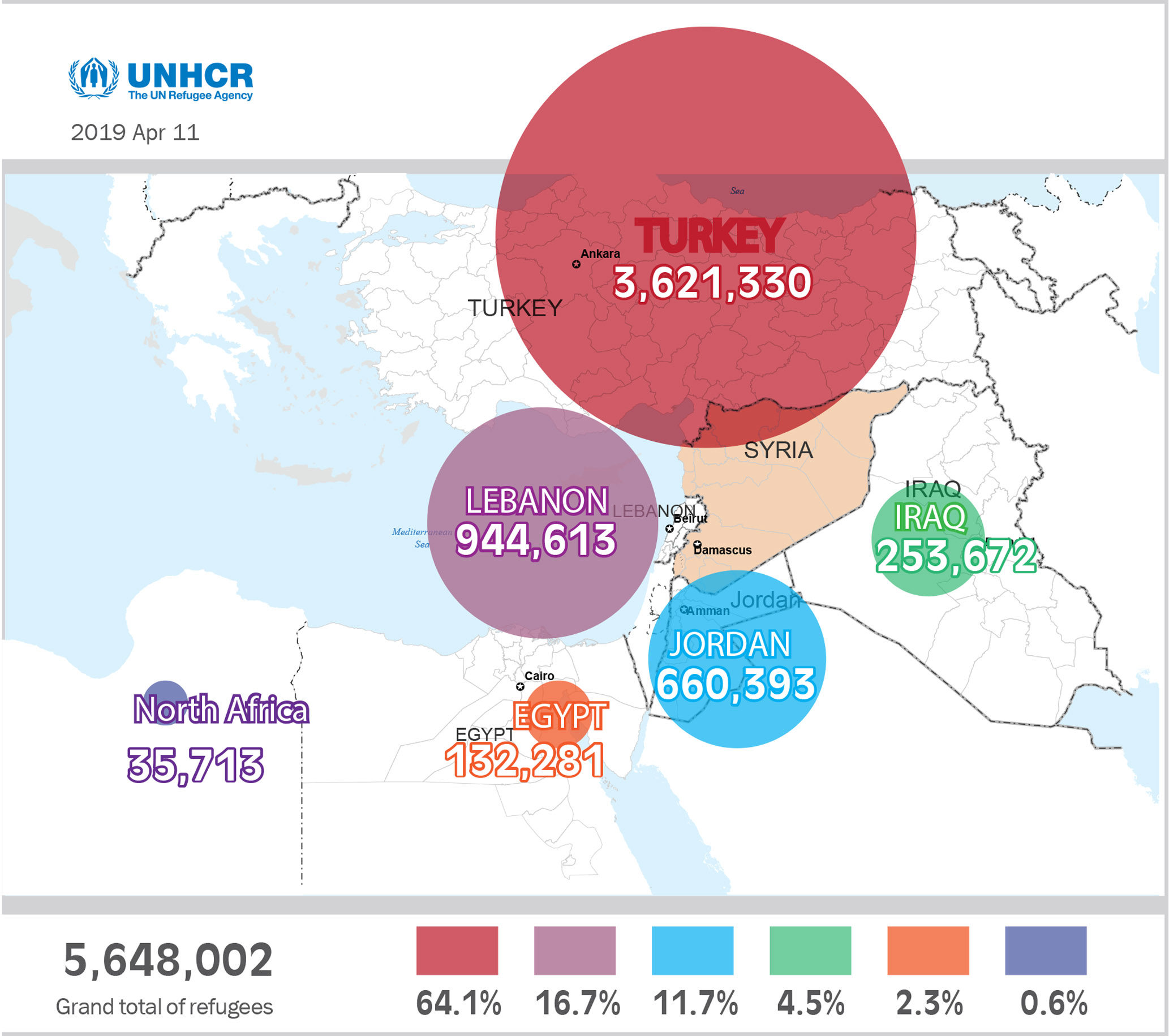
Syrian Refugees Apr. 2019 (UNHCR)

The Syrian Civil War is now in its fifth year. What started in 2011 during the Arab Spring uprisings has escalated into all out warfare between multiple belligerents, including the Syrian Arab Republic led by Bashar Al-Assad, the Syrian Interim Government (its main opposition), the Islamic State (ISIS), the Syrian Democratic Forces of Rojava, and various regional actors and international allies. By the end of 2015, the war has produced between four and five million refugees, spread mostly through Turkey, Jordan, Lebanon, and Egypt.

Squires is a member of the St. Savior’s Parish of the Anglican Church and goes to the ministers with a declaration, “We have got to get involved with this Syrian crisis.” His anxiety is immediately alleviated by their acceptance of his challenge, but he does not know where to begin. Fortunately, his research brings him to the Anglican United Refugee Alliance (AURA). “I read that the churches had an organization called AURA that coordinated everything, which made it so much easier. I mean, they had a playbook.”

AURA is a Canadian charitable organization assisting in the sponsorship and resettlement of refugees. Their mission is to provide support and expertise to groups involved in refugee sponsorship. Alex Hauschildt is the Operations Director of AURA. “When you look at refugees, they’re some of the most vulnerable people in the world,” says Hauschildt.

AURA Logo.

“I don’t think a lot of people understand how lucky we are to simply have been born here. Because we have such privilege, we should work towards helping other people.”

AURA is one of over 120 Sponsorship Agreement Holders (SAH) in Canada, just under half of which (53) are located in Ontario. Immigration, Refugees and Citizenship Canada (IRCC) coordinates the SAHs, most of which are religious, ethnic, community, or humanitarian organizations holding agreements with the government of Canada to provide support to private sponsorship groups. “The Anglican Church and United Church are national churches, but they both recognize sponsorship was important to do regardless of whether you’re Christian or not,” says Hauschildt. “Certainly since 2015, there was an extreme interest in people helping Syrian refugees.”

Squires contacts AURA and is tasked with raising enough money for his group to privately sponsor a family from Syria. They need $40,000, based on AURA’s estimated cost formula for a family of two adults and two children, with a minimum of $20,000 prior to submission. “I realized we couldn’t raise that much money through the church,” says Squires. “So, I went to the community, and it just took off like wildfire. The committee, in fact, was made up of more people from the community than the church.” Orono’s small businesses, church, and 200 of its community members come together and raise $60,000 within three months.

In March of 2016, IRCC and AURA provide Squires and his private sponsorship group the names of a family of three Syrians currently living in Lebanon: Ahmed Mohamad, his wife Fatima, and their young daughter.

``We should work towards helping other people.``

A NEW OPPORTUNITY

Mohamad and Fatima have been in Lebanon for almost three years. During this time, they welcome their first child, a daughter named Jamila who is now two years old. “I was happy—I had a new daughter,” says Mohamad. But he barely makes enough money to pay rent and feed his family.

When the couple first arrived, Mohamad could not find work for a month. His mother had been there since she decided to visit from Syria but could not return due to the bombing. Mohamad eventually finds work with his brother in a company called Tenten, doing the same work he did in Syria as a shoemaker, but for far less than what he made in Aleppo. Most of the money goes towards rent, and there is little left over for anything else. When Jamila is born, Mohamad is registered in his work union and fortunately, they help him pay the hospital fees.

“I was working hard, but no matter how hard you work, you pay almost all of it for rent,” says Mohamad. While living in Lebanon, the couple and their newborn daughter register as refugees with the UNHCR. “I wanted to go anywhere—anywhere, because it was too hard to stay in Lebanon working only for rent,” says Mohamad. He continues to work with his brother at Tenten, and Fatima becomes pregnant with their second child. The prospect of another newborn is exciting but will leave them financially dire.

On an evening early in 2016, Mohamad receives a surprising telephone call. “Someone called me from the UN and said to me:

‘Are you Ahmed Mohamad?’

I said, ‘yes.’

He said to me, ‘Canada needs you—do you want to go to Canada?’

I said, ‘Yes, please.’”

Fatima is now eight months pregnant with their son. Without hesitation, they pack their bags, say goodbye to their family, and depart for Canada.

RIPPLE AND LIFELINE

Stan Squires and his group are getting ready to receive Mohamad, Fatima, and Jamila at the airport. They are not alone, but one of thousands of groups in Canada taking part in private sponsorship.


In Toronto, Andrew Fitzgerald puts together a group of 15 community members called the Ripple Refugee Project, which immediately sponsors a family of eight Syrian refugees in November 2015. Each member of the group brings a particular skill to the endeavour. “I am of the opinion that because we can, we must,” says Rebecca Davies, a major fundraiser for Save the Children International who joins the Ripple team. “The only reason that we’re not those refugees in those absolutely shitty circumstances is just genetic and passport lottery win.”

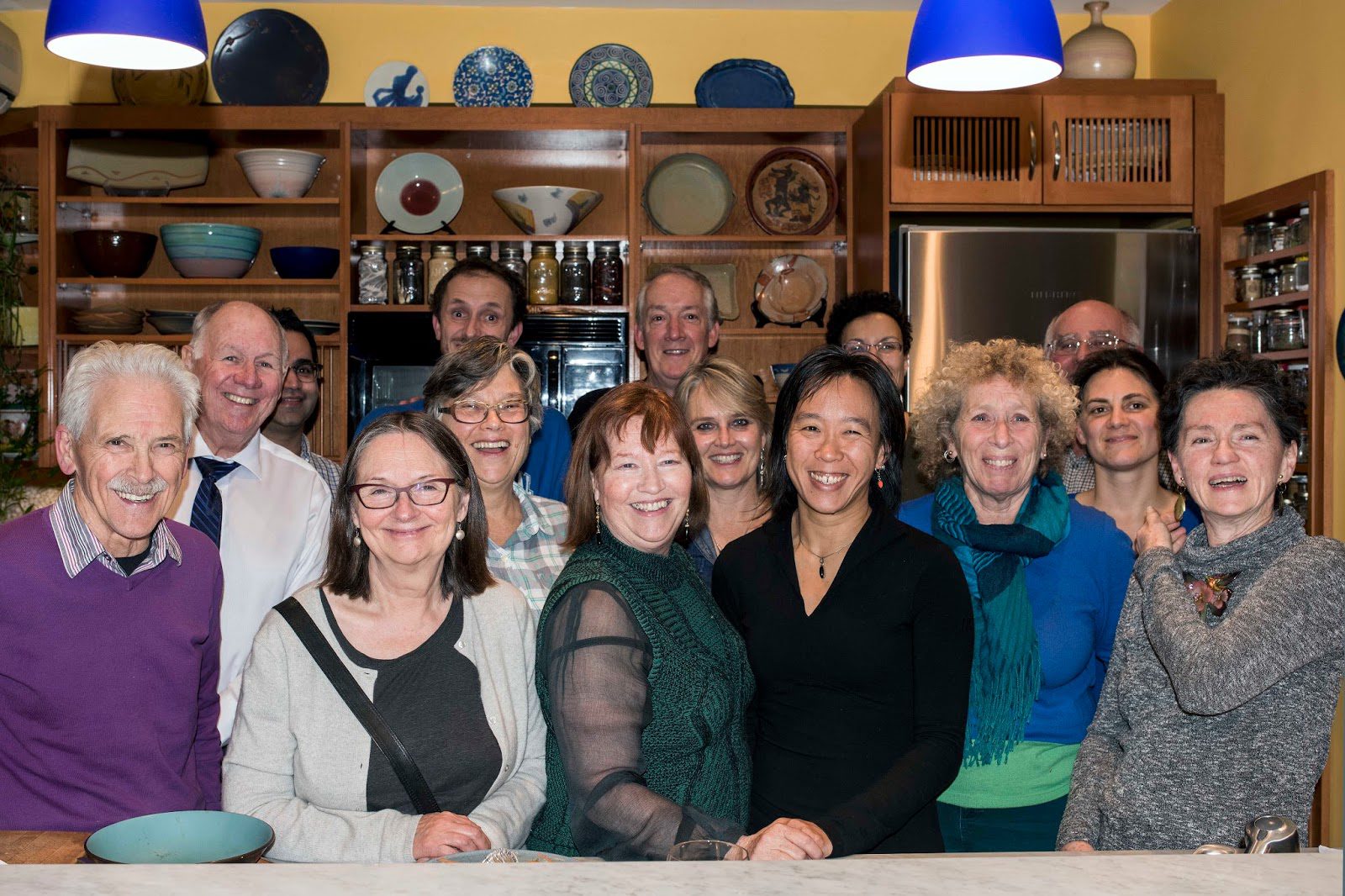
Members of Ripple

Fitzgerald echoes this sentiment: “I recognize that I had kind of won the birth lottery by being born in Canada.” As of December 2019, The Ripple Refugee Project has resettled 20 refugees from five different families through both private sponsorship and a hybrid of government-assisted semi-private sponsorship.[1]

Dr. Anver Saloojee, a political science professor from Ryerson University, learns of an organization called Lifeline Syria when it puts out a call to university faculty to sponsor a Syrian family under the name Operation Lifeline Syria Ryerson. He and his wife Zuby take on the challenge and begin raising money. They form a group comprising friends, family, and other faculty at Ryerson and are presented by the Archdiocese of Canada with a number of families that have already been vetted by the UN and approved by the government of Canada. But something isn’t sitting right with Saloojee.

“I phoned my wife and said, ‘Look, I think I found a family I want to sponsor, but it’s not a family.’ Everybody was sponsoring families,” says Saloojee. “For me it was important at this time, because the then-government of Canada, in the runup to the election in 2015, was making all sorts of pronouncements about Muslims and young Muslim men. For me it was important to make a statement that we were going to support two young men.”

The two young men Saloojee finds are currently in Jordan, where their father has just passed away. They lost the rest of their family in a bombing raid in Homs, Syria. “I said to Zuby, ‘Are you okay if I tell the Archdiocese that we are going to sponsor two young men, age 17 and 19? Nobody is going to sponsor these two young men.’ She said ‘Absolutely’ and that’s how we began,” says Salojee. In September of 2015, he convenes the group.

“Here is what we are doing,” says Saloojee to his group. “Would you like to join?”

Nobody said no.

[1] Canada’s Blended Visa Office-Referred program (BVOR) combines private sponsorship with six months of government assistance

PRIVATE SPONSORSHIP IS BORN

On April 30, 1975, Saigon fell to the People’s Army of Vietnam and the Viet Cong. This ended the Vietnam War and precipitated one of the largest refugee crises of the 20th Century. Millions of people left Vietnam, Cambodia, and Laos during The Indochina Refugee Crisis of the 1970s and 1980s. Many people with ties to the former government and military of South Vietnam were sent to re-education camps, where they were tortured, starved, and compelled to do forced labour. In September 1978, 1,220 people departed Vietnam in an old boat and arrived in Indonesia. By June of 1979, monthly estimates of people arriving by boat on foreign shores peaked at 56,000. These refugees became known as the Vietnamese Boat People. According to the UNHCR, as many as 400,000 of them died at sea.

The political crisis in Southeast Asia that resulted from the influx of new refugees was the genesis of the private sponsorship program in Canada. In April 1978, when Canada’s new Immigration Act, 1976 came into force, it identified for the first time refugees as a distinct category of immigrants and adopted the definition of a refugee within the meaning of the UN Convention Relating to the Status of Refugees. Furthermore, it established one of the most innovative aspects of Canada’s refugee resettlement program—private sponsorship.


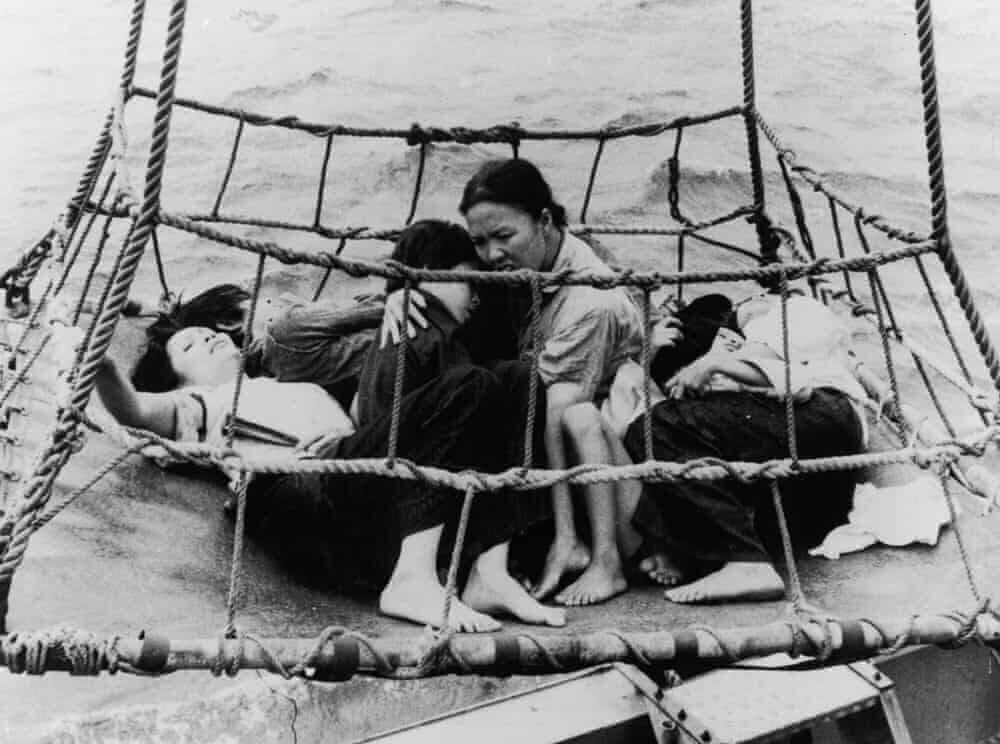
Vietnamese Refugees (Courtesy The Guardian)
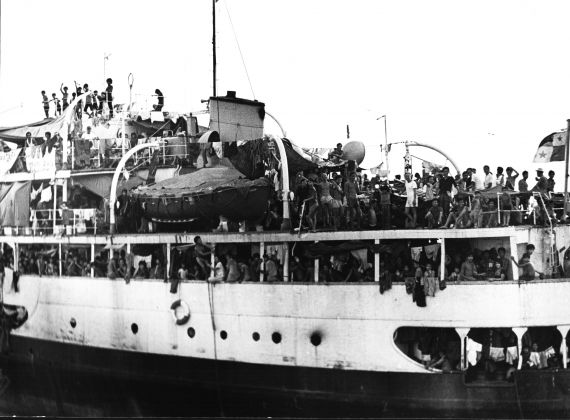
The Hai Hong (Courtesy Accenti)

The Indochina Refugee Crisis reached its zenith in Canadian public attention in November of 1978. Over 2,500 Vietnamese passengers of the Hai Hong ship were stranded off the coast of Malaysia with almost no food or water after being severely damaged in a typhoon. Having been refused port of entry in both Indonesia and Malaysia on the grounds that these passengers (mostly Vietnamese of Chinese ethnic origin) had paid the Vietnamese authorities to be allowed to leave and hence were not refugees, they were abandoned to die on the ocean. As the story spread rapidly through Canadian media, provincial and federal leadership decided to take charge.

Québec prepared to welcome at least 200 refugees from the Hai Hong under the new Cullen/Couture agreement.

The federal government quickly agreed that 600 of the ship’s passengers would be resettled in Canada. Other countries, including France, the United States, and West Germany soon followed Canada’s example.

Over 60,000 Indochinese refugees were admitted to Canada over the course of 1979 and 1980, about 26,000 of whom were sponsored by the Canadian government. The remaining 34,000 were sponsored by the private sector. Over the next decade, Canada continued to welcome Indochinese refugees, the majority coming through private sponsorship. Around 200,000 Vietnamese, Cambodians and Laotians were resettled in Canada, the highest per capita among all nations to have accepted such refugees.

ARRIVAL

It is a 12-hour flight from Egypt—where Mohamad, Fatima, and Jamila transited between Lebanon and Canada—to Toronto Pearson Airport. The plane finally lands, they collect their belongings, and walk through the gate, where Squires and the group of sponsors are waiting for them. Mohamad finds it difficult to describe what this felt like. “It was an incredible feeling when you see that someone you don’t know helped you to get away from a place of war and come to a safe place,” says the young father. “I can’t describe these feelings. I was so happy to see these people there.”

For the first time in well over three years, the family feels safe. Squires and the others drive the Mohamad family to the town of Bowmanville to stay the night before making their way to Orono the next day. Squires is nervous because about half of the church people do not initially support the sponsorship. Once the family arrives in Orono, his feelings are eased. “As soon as the family came, when they saw that little girl,” says Squires. “The community loved them.”

The family quickly finds accommodation through Orono’s dentist. “The first few months there, when I came home, I had everything such as clothes and food,” says Mohamad. “The fridge is full; everything is okay, and all the people were great.” Squires finds an ex-public nurse to help Fatima, who is eight months pregnant. Four weeks later, she gives birth to a son.

“They wanted to choose a name that reflected Canada and their happiness,” says Squires. After the boy was named, Squires would take the family to gatherings of other refugees and the women would gang up on Fatima and tell her that she should have chosen a traditional Muslim name. But Fatima is an independent woman and is having absolutely none of it. She has since given up the hijab and wears jeans—Squires knows this is in protest. “They were really affected by ISIS and the impact on their religion,” he says.

Fatima looks out from her hospital window, deliberating a name for her newborn son. There was a bird the couple saw when they first arrived. It brought them joy.

“Robin,” she says.

.


“I can’t describe these feelings.”


.

CHALLENGES

Most refugees describe language as the most challenging aspect of resettlement. When Mohamad first arrives, he doesn’t speak any English. The sponsor group provides two English teachers. They come every day and spend one to two hours with the couple. Mohamad is a level 0 when he arrives in Canada, but after eight months, he is a level 2. “He went from being illiterate in his native language to being able to speak and write somewhat already in English,” says Hauschildt.

There is such a premium on language that newly settled refugees are often encouraged not to start work during the first year or at least until they have a sufficient grasp of English (or French, if they are living in Quebec). “One of the main purposes of this monthly allowance is to enable them to focus on learning English and settling and not feel like as soon as they get off the plane, they’ve got to get out there and find work,” says Fitzgerald.

For Sarim and Amil, the transition is a little less smooth. The brothers lost everything when their house was bombed in Homs, but their traumatic memories remain. Fitzgerald describes a refugee with advanced education and exceptional English. “We thought everything was great, but he was saying that if you’re a refugee, almost by definition you’ve suffered mental trauma.”

Sarim and Amil feel welcomed by the Saloojees and their group but are scared about what is going to happen. “We tried to speak to them through Google Translate because we couldn’t speak a word of English,” says Sarim. He takes six months of ESL classes while Amil begins high school. From there, Sarim finds a job with a plumbing company, applying experience he had working summers in Syria. But the job is difficult, and language is a barrier. “I had to start from zero again,” says Sarim. “No one would like to keep anyone if you ask them to do something and they can’t understand what you’re talking about.”

Regardless, Sarim likes the job and is determined to prove himself. Every day, he makes exhaustive lists in Arabic on his phone of the tools they would use, then takes them home to translate. He does this day in and day out until he can fully understand the orders he receives at work.

Amil struggles at first with high school, but his marks slowly improve, and he eventually graduates with distinction. “I think it’s in large measure due to them and that drive and that ability and the upbringing,” says Saloojee, who provides all the support he can through the sponsorship group but is amazed by the determination of the two young men.

“There’s this idea that people think refugees are broken people, but I actually think they’re some of the strongest because they’ve been able to draw the situations to actually get here. It’s remarkable,” says Hauschildt.

``...if you’re a refugee, almost by definition you’ve suffered mental trauma.”

Mohamad’s language challenges are also compounded when, after eight months, he decides to start working. The sponsor group finds him a job at the local Irish pub where his new boss, John Walsh, speaks faster than Mohamad can understand. “Since I started working, language was a challenge for me,” says Mohamad. “It was difficult as I wasn’t understanding people when they were talking. But I was able to overcome it a bit with learning and listening to my friends’ advice.”

Mohamad, his wife and children continue to feel quite fortunate to live in Canada, despite the challenges. He talks about all the friends Jamila has in school. After the COVID-19 outbreak, Mohamad recounts a recent situation wherein his eldest daughter anguishes at missing her friends. “One week after the virus outbreak, she said to me, ‘Dad, I am missing my teachers and friends and I want to see them.’ I told her that when the virus goes away, you can go anywhere you want.” He means it too. “Once this pandemic is over, I need to go back to my work because now I am at home and not working. But before, I need to take my wife and children out to go everywhere,” says Mohamad. He is happy that he can do this. Not many refugees are given the opportunity.

#KIYIYAVURANINSANLIK

When journalist Nilüfer Demir was met by the lifeless body of three-year-old Syrian boy Alan Kurdi off the coast of Bodrum, Turkey on September 2, 2015, she was petrified, but determined for the world to see the young boy. Kurdi is wearing a red t-shirt and blue shorts.  His small brown sneakers are kicked out behind him. He is Kurdish-Syrian like the Mohamad family, but did not come through Lebanon. Kurdi’s journey took him on a long road through Turkey before he boarded a small inflatable raft with too many people and too few life vests. He is not the only boy to have drowned that morning. “The coastline of Bodrum was like a children’s graveyard that day,” says Demir.

The young Turkish journalist had very little idea the profound and far-reaching impact her picture would have on the world. She was also unaware that the price Kurdi’s father, Abdullah, had to pay for four spots in the overcrowded dinghy was $5,860 in Canadian dollars, a sum transferred to him by his sister Tima, who lived in British Columbia, Canada. This is where the family was ultimately headed.

“Behind the Most Heartbreaking Photo of 2015”: video courtesy of Time Magazine

“The picture of Alan Kurdi is horrifying. The sad part is that it happens every day,” says Hauschildt.

Canada’s private sponsorship program had been a model of international success through the 1980s after the Indochina Refugee Crisis. In the early 1990s, Canada resettled over 40,000 refugees in one calendar year. But the program entered a period of decline in the mid 1990s. From then until 2015—the year Kurdi died and the Syrian Refugee Crisis reached a peak—a little over 10,000 refugees were resettled in Canada each year, mostly as Government-Assisted Refugees (GAR).

On September 3, 2015, the picture of Alan Kurdi awakened Canadians from coast to coast as it headlined media publications across the country. The Toronto Star reported a desperate letter from Tima Kurdi to then Minister of Citizenship and Immigration Chris Alexander to sponsor Abdullah’s brother, Mohammad. Tima Kurdi had planned to apply for Abdullah and his family once Mohammed was approved, but it never happened. It was six and a half weeks before the 2015 Canadian federal election, and outrage across the country lead to the formation of various private sponsorship groups, including The Ripple Refugee Project, Operation Lifeline Syria Ryerson, and a group of concerned citizens of a small town called Orono. “It really came out of my frustration with the Harper government and their lack of response over the Syrian crisis,” says Fitzgerald.

The Liberal Party campaigned on a promise to resettle 25,000 Syrian refugees if elected. On October 19, 2015, they won the election with a majority government, and between November 2015 and February 2016—a period of 118 days—over 26,000 Syrian refugees were resettled in Canada.

SPONSORSHIP ENDS

Ahmed Mohamad is now working 35 to 40 hours a week at the Irish pub. “I work very hard,” says Mohamad. “I don’t like to be lazy—I am serious at work.”

Squires corroborates this: “John Walsh, the pub owner, said to me, ‘Any more refugees you get, please send them to me. Ahmed is an amazing worker.’”

His daughter Jamila’s English is wonderful, and she loves school. Fatima’s English is slipping a little as she spends a lot of time at home taking care of the kids, but she loves Canada. The year of sponsorship is now coming to an end. Private sponsorship provides social and financial support for one year. For Mohamad, the this has formed the basis of his family’s support in Canada.

Daughter Jamila
Daughter Jamila

“There’s this presumption that you say goodbye at month 13, and that, in some people’s minds, the right thing to do is to have some distance at that point because you want them to feel independent,” says Davies. “But honestly, in every single one of our cases, we’re going to be friends and family for life.”

Squires and his group give a lasting gift to Mohamad and the family. In addition to hands-on help with administrative problems and filling out an endless array of forms, they pay his rent for the first six months of the second year.

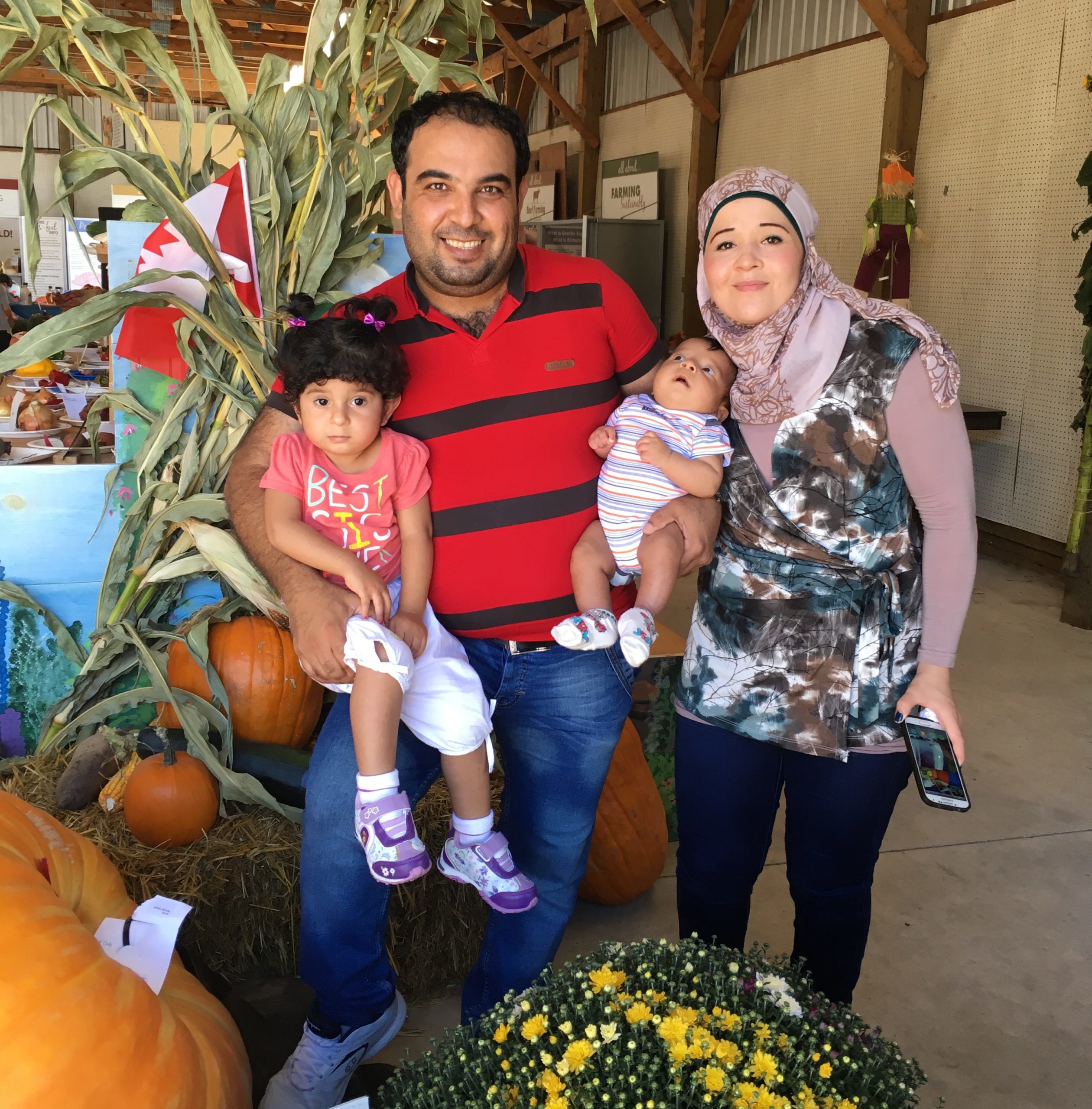
The Mohamads at the Orono Fair 2017

Sarim has now been with the plumbing company for two years. They give him a full apprenticeship. After he finishes, he will have to take three courses, at which point, he will be a fully licensed plumber. Amil receives a scholarship when he graduates high school. He is admitted to George Brown College in Toronto in a difficult Honours Bachelor of Technology program in construction management.

The brothers no longer live with Drs. Anver and Zuby Saloojee, but they are constantly in touch. “Sarim and Amil became fully integrated into our family.  They became two sons in our family,” says Saloojee.


The Ripple Refugee Project takes on another group of refugees—this time, a single Eritrean mother and her four children. Davies puts them up in an attached refurbished suite whose creation required the remortgaging of her house. “When you’re in a sponsorship group, you’re like a family,” says Davies. “It’s probably the most meaningful thing you’ll ever do.”

GEOGRAPHIC INSULATION

Every two and a half seconds, someone is forcibly displaced from their home. This equals roughly 35,000 people every day worldwide who are forced to flee due to conflict and persecution. Many nations deal with a constant flood of refugees, mostly from Africa and the Middle East. “European countries are really overwhelmed with the influx of refugees,” says Anna Hill, co-director of The Together Project in Toronto. “Because they’re overwhelmed, it’s difficult to innovative and be proactive because they’re often in a situation where they’re just trying to be responsive and reactive.”

Canada’s private sponsorship program is both unique and innovative, but many argue Canada has only been afforded this opportunity due to its geographic insulation. While Canada shares the world’s longest border with the United States, it is also located between the world’s two largest oceans. Refugees do not come through the borders and claim asylum in the manner they do in Europe. Furthermore, because of the Canada-United States Safe Third Country Agreement, those who come through the United States must claim asylum there. The geographic isolation gives IRCC the ability to screen and select refugees through the UNHCR before they arrive.

IMG_4960_1-2400x1260_thetogetherproject

Not all refugees resettled to Canada have the luxury of a private sponsorship group. One third of resettled refugees are Government-Assisted Refugees (GAR). Co-founder Anna Hill says The Together Project was formed to fill the social and emotional deficit that exists for GARs who do not have the support of the private sponsorship groups. “Sometimes refugee newcomers can feel quite isolated when they get here and they really are seeking opportunities to be Canadian,” says Hill.

It also allows people without the means to provide sponsorship an opportunity to be involved. “I think a lot of people are in support of the idea of welcoming communities, but they lack practical opportunities to make a meaningful difference in a specific newcomer’s life,” says Hill. The organization draws from a base of over 600 volunteers and puts together Welcome Groups of five people to impart specific skill sets and social tools for newcomers. Almost half of the volunteers for The Together Project either came to Canada as a newcomer or have some connection to a newcomer experience through their family. “We really feel like it’s creating this cycle of giving back,” says Hill.

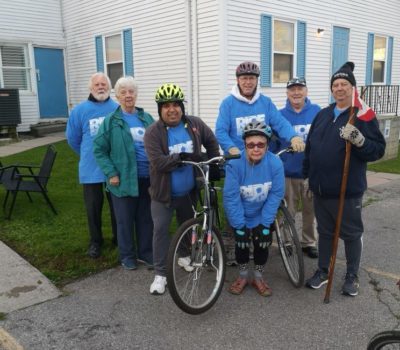
Mohamad knows this too. On October 5, 2019, he leads one of AURA’s Ride for Refuge cycling teams in a fundraiser that raises over $27,000. AURA says this money is vital in allowing them to continue providing support and expertise to groups involved in refugee sponsorship and resettlement. “Now, whenever I have some extra money I go and help people too,” Mohamad says. “I believe that when people help you, you should help them too.”

Ride for Refuge 2019

EXPORT

92,400 refugees were resettled to 25 countries in 2018. Canada led the world in admitting the largest number of resettled refugees with 28,100. The United States was second with 22,900. Other countries that admitted large numbers of resettled refugees during the year were Australia (12,700), the United Kingdom (5,800) and France (5,600).

“There are some other countries where the Canadian government is helping to fund the export of the model,” says Fitzgerald. At the end of 2016, the government of Canada and the UNHCR launched the Global Refugee Sponsorship Initiative in Ottawa to promote and support the development of new community-based sponsorship programs in other countries. Since then, New Zealand helped sponsor 24 refugees in 2018 through a pilot program. The senior staff of Settlement Services International (SSI) and Refugee Council of Australia (RCOA) met in Canada in June 2017 to explore a private sponsorship strategy similar to that of Canada. Ireland and the UK have recently tried similar private sponsorship models.

“All the data shows [private sponsorship] is a better model because of the wraparound support services,” says Saloojee. “Different people brought their different strengths to the group and I think as a group, we became a phenomenal wraparound service,”


Mohamad and Fatima still miss Syria. “Of course, it was hard and difficult for me to leave my mother and brothers and sisters in both Lebanon and Syria. We left everything behind us in Aleppo,” he says. “We are sad, but at the same time happy that we are done with rockets and bombs. It was so scary and traumatic.”

Squires is now a member of AURA’s board of directors. He and the members of his sponsorship group are working to get Mohamad’s brother to Canada from Lebanon. They believe this might happen within a year. “John [Walsh] has already offered him a job,” says Squires. Rebecca Davies describes the process of family reunification through private sponsorship as “the echo effect.” Ripple was able to resettle more refugees through this process. Since Mohamad arrived, four more Syrian families live in the area around Orono and Newcastle.


There are 25.9 million refugees worldwide. Half of them are children. In addition to the 41.3 million internally displaced persons (IDP) and 3.5 million asylum seekers worldwide, the number of forcibly displaced persons around the globe is equivalent to the combined population of the United Kingdom and Ireland.

Sarim and Amil are not children anymore, nor in fact are they refugees. Sarim and Amil are Canadian citizens. “We studied for the citizenship very hard and they told us we passed.” Saloojee and his wife, along with other members of the group crowd into the hall to watch the young men, now in their early 20s, take the oath of citizenship. It is an extraordinarily proud day for the group, but even more for the brothers.

SNOWFALL

Mohamad has just finished a shift at the Irish pub. He comes home and tucks his newest daughter, Rozana, into her crib. He looks up at the ceiling above her. It isn’t the same bathroom ceiling that perhaps saved his life in Aleppo, but at the moment it halts the gentle fall of Ontario snow that he grown accustomed to. He puts Robin and Jamila to bed and settles down for the night. A hundred kilometres west of Mohamad, another Jamila smiles towards her young daughter and son, two of four Eritrean children currently sponsored by Ripple. A few months ago, the family was waiting in a refugee camp in the middle of Sudan. They have just arrived in Toronto. Rebecca Davies stands to the side gleefully capturing the moment with her phone, a moment of virality yet to be known.

Courtesy: Rebecca Davies (YouTube)

The two children are looking upwards, but not at a ceiling. They are looking at the sky. Something is falling they have never seen before. As the first light ice crystals reach them, the girl and boy erupt into fits of excitement and laughter. Within moments, they are dancing and giggling as they spin wildly through Davies’ backyard.

Their mother looks onward with a smile on her face. When asked what her daughter thinks of the snow, she sits back with a contented sigh and responds simply.

“It’s beautiful.”

.


.

All images of Ahmed, Fatima, Jamila, Robin, and Rozana (the Mohamads) courtesy of Stan Squires